The USA has a site called How Many of Me which which can show how many people share any given name. There is a similar site for the UK called Yournotme
Needlss to say I needed to know how many Americans shared the name Jams O’Donnell and there absolutely none - no surprise there.
Trying Yournotme and I get this:
“You don’t exist. Go and look in the mirror and you see someone then we’re wrong, else you're some kind of magic pixie, elf, carrot or vampire. Sorry.”
I wonder which of these I am... Personally I think it's a carrot!
08 November 2006


07 November 2006
Shake hands with the devil?

Just two days after being sentenced to death by hanging for crimes against humanity Saddam Hussein seems to have been born again and is urging Iraqis to seek reconciliation.
"I call on all Iraqis, Arabs and Kurds, to forgive, reconcile and shake hands," the former president told the court as second genocide trial commenced, this time in relation to the Anfal campaign during which more than 180,000 people are believed to have died in the Anfal campaign.
Saddam Hussein was subdued in court on Tuesday, in contrast to his defiance on Sunday as his death sentence was read out. Speaking to the court in the afternoon session, Saddam Hussein cited references to the Prophet Muhammad and Jesus who had asked for forgiveness for those who had opposed them. In a markedly different atmosphere to Sunday, his call for mutual reconciliation came after he had respectfully challenged one witness' testimony.
Call me mister cynical but I somehow doubt that the all new touchy feely Saddam will cut much ice with many. Of course Iraq needs reconciliation but perhaps Saddam could have prevented many of its ills with a few simple hand shakes in the past:
Instead of invading Iran and precipitating the first gulf war, perhaps he could have shaken hands with Ayatollah Khomeni- It would have gained just as much land (nil) and would have meant the best part of a million young Iranian and Iraqi men would not have died needlessly, let alone the many more left mutilated.
Perhaps it should have occurred to him to shake hands with the Kurds instead of gassing them,
A simple handshake to the emir of Kuwait instead of seeking to make that country the 19th province of Iraq?
Handshakes all round to the Marsh Arabs and his political opponents, real and perceived?
Oh Saddam, If only you had thought of it earlier!
saddam Hussein
06 November 2006
My gut says string him up, my head says otherwise

I've only just seen the news that Saddam Hussein has been sentenced to death. While I would not mourn this bastard's passing, I would rather he had a long and miserable life. I suppose one cannot oppose the death penalty but let some be executed.
03 November 2006
The most expensive painting ?
 No.5 1948
The Independent reports that Jackson Pollock’s No.5 1948 changed hands for £73m ($140m). if confirmed this would be the most money ever paid for a painting, exceeding the $134m paid recently for Gustav Klimt's Adele Bloch-Bauer
 Adele Bloch-Bauer
Unlike the Klimt which was bought for a private gallery it is unlikely that the Pollock will be on view. The buyer, is believed to be David Martinez, the founder of Fintech Advisory Ltd, a financial house that specialises in buying Third World debt.
Both are stunning paintings but I still cannot see what makes them worth so much. I wonder what the artists themselves would think of those prices…
Jackson Pollock Klimt art


02 November 2006
An unsung Scottish hero of WWII
Robert Watson Watt is now almost forgotten even though he was the man who helped win the Battle of Britain and whose invention went on to lay the foundations for a host of modern life-saving technologies. According to today’s Independent The recently formed Watson-Watt Society wants to raise £50,000 to build a memorial statue in his home town, Brechin in Scotland, to the man who is officially credited with creating the first workable radar system.
 Robert Watson-Watt
A descendant of James Watt, the engineer and inventor of the steam engine, Watson-Watt's method of using radio waves to detect objects helped tilt the balance of air superiority in 1940 when the overstretched RAF was able to intercept enemy bombers in all weathers and at night. Without it, Britain would have probably lost the battle. His system of "radio detection and ranging", which was later shortened to "radar", came about by accident as Watson-Watt had initially been involved in trying to find a way of predicting thunder and lightning to warn aviators.
An unassuming man, Watson-Watt was born in Brechin, Angus, in 1892 and was educated at Damacre School in Brechin and Brechin High School before graduating with a BSc(engineering) in 1912 from University College, Dundee - which was then part of the University of St Andrews. At the start of the First World War, he was offered a post at the Meteorological Office, which was interested in his ideas on the use of radio for the detection of thunderstorms. Lightning gives off a radio signal as it ionizes the air, and he planned on devising a method of detecting that signal in order to warn pilots of approaching thunderstorms. However, while carrying out experiments he found that aircraft could also be detected without being seen and - as a result - discovered the underlying science of radar.
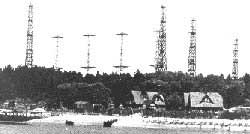 Chain Home Radar station
The Scottish physicist first developed a working radar system in 1935 but it was not until 1937 that the Chain Home radar system became operational, linking stations along the south coast of England in a relay that could detect aircraft approaching the UK at a range of more than 100 miles. In 1942, Watson-Watt's work was officially recognised with a knighthood and in the 1950s he moved to Canada and later lived for a short time in the United States. Eventually, he retired and returned to Britain until his death in 1973 at the age of 81.
Brian Mitchell, secretary of the Watson-Watt Society, said "Watson-Watt's work was extremely important during the Second World War and has been further developed into today's air traffic control systems. It was feared that German aircraft would be able to flatten every town in the country as their bombers could approach Britain from altitudes that were out of reach to anti-aircraft guns. Watson-Watt developed the system to detect and locate the threat by radio methods. A statue or sculptured stone monument will be a fitting memorial to our most famous son,"
Click here for a biography of Watson-Watt and here for information avout the Chain Home radar system
Watson-Watt radar
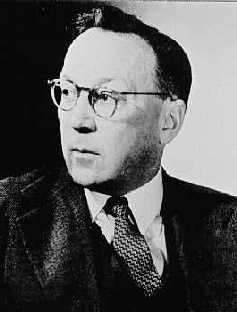 Robert Watson-Watt
A descendant of James Watt, the engineer and inventor of the steam engine, Watson-Watt's method of using radio waves to detect objects helped tilt the balance of air superiority in 1940 when the overstretched RAF was able to intercept enemy bombers in all weathers and at night. Without it, Britain would have probably lost the battle. His system of "radio detection and ranging", which was later shortened to "radar", came about by accident as Watson-Watt had initially been involved in trying to find a way of predicting thunder and lightning to warn aviators.
An unassuming man, Watson-Watt was born in Brechin, Angus, in 1892 and was educated at Damacre School in Brechin and Brechin High School before graduating with a BSc(engineering) in 1912 from University College, Dundee - which was then part of the University of St Andrews. At the start of the First World War, he was offered a post at the Meteorological Office, which was interested in his ideas on the use of radio for the detection of thunderstorms. Lightning gives off a radio signal as it ionizes the air, and he planned on devising a method of detecting that signal in order to warn pilots of approaching thunderstorms. However, while carrying out experiments he found that aircraft could also be detected without being seen and - as a result - discovered the underlying science of radar.
 Chain Home Radar station
The Scottish physicist first developed a working radar system in 1935 but it was not until 1937 that the Chain Home radar system became operational, linking stations along the south coast of England in a relay that could detect aircraft approaching the UK at a range of more than 100 miles. In 1942, Watson-Watt's work was officially recognised with a knighthood and in the 1950s he moved to Canada and later lived for a short time in the United States. Eventually, he retired and returned to Britain until his death in 1973 at the age of 81.
Brian Mitchell, secretary of the Watson-Watt Society, said "Watson-Watt's work was extremely important during the Second World War and has been further developed into today's air traffic control systems. It was feared that German aircraft would be able to flatten every town in the country as their bombers could approach Britain from altitudes that were out of reach to anti-aircraft guns. Watson-Watt developed the system to detect and locate the threat by radio methods. A statue or sculptured stone monument will be a fitting memorial to our most famous son,"
Click here for a biography of Watson-Watt and here for information avout the Chain Home radar system
Watson-Watt radar
Redwine adds life…
The Independent carries a report concerning a natural substance found in red wine counters the negative effects of an unhealthy high-fat diet,
A study carried out on mice fed on a diet so high in saturated fats that it was equivalent to eating a cream cake with every meal. Unsurprisingly they became obese, and suffered health disorders, and died significantly earlier than mice on normal diets. A second group on the high-fat diet were given resveratrol, a plant extract found in grapes, their health and longevity were almost indistinguishable from normal mice, although they still became obese.
Resveratrol is produced by a range of plants in response to environmental stress and it appears to work by activating a key gene in mammals called SIRT1 which produces an enzyme link-ed to extending lifespan.
Professor Sinclair if the Harvard Medical School said: "[It] may mean we can stave off in humans age-related diseases such as type-2 diabetes, heart disease, and cancer, but only time and more research will tell. “ Other tests showed that the mice given resveratrol outperformed their fat cousins in terms of agility and co-ordination. "The mice on resveratrol have not been just living longer, they are also living more active, better lives.," Professor Sinclair said.
Matt Kaeberlein and Peter Rabinovich of the University of Washington warned people not rush out and buy resveratrol. "Many people will wonder whether they should start supplementing their diets with resveratrol," they say in a Nature editorial. "Our advice is to exercise caution. For now we counsel patience. Just sit back and relax with a glass of red wine - which, alas, has only 0.3 per cent of the relative resveratrol dose given to the gluttonous mice."
I knew that that third bottle of Shiraz was doing me good….
red wine resveratrol health
A study carried out on mice fed on a diet so high in saturated fats that it was equivalent to eating a cream cake with every meal. Unsurprisingly they became obese, and suffered health disorders, and died significantly earlier than mice on normal diets. A second group on the high-fat diet were given resveratrol, a plant extract found in grapes, their health and longevity were almost indistinguishable from normal mice, although they still became obese.
Resveratrol is produced by a range of plants in response to environmental stress and it appears to work by activating a key gene in mammals called SIRT1 which produces an enzyme link-ed to extending lifespan.
Professor Sinclair if the Harvard Medical School said: "[It] may mean we can stave off in humans age-related diseases such as type-2 diabetes, heart disease, and cancer, but only time and more research will tell. “ Other tests showed that the mice given resveratrol outperformed their fat cousins in terms of agility and co-ordination. "The mice on resveratrol have not been just living longer, they are also living more active, better lives.," Professor Sinclair said.
Matt Kaeberlein and Peter Rabinovich of the University of Washington warned people not rush out and buy resveratrol. "Many people will wonder whether they should start supplementing their diets with resveratrol," they say in a Nature editorial. "Our advice is to exercise caution. For now we counsel patience. Just sit back and relax with a glass of red wine - which, alas, has only 0.3 per cent of the relative resveratrol dose given to the gluttonous mice."
I knew that that third bottle of Shiraz was doing me good….
red wine resveratrol health
01 November 2006
Hopefully not a step in the wrong direction
Next Tuesday, voters in Wisconsin will be asked to consider a referendum on whether to reinstate the death penalty after more than 150 years without it. The referendum asks:
Should the death penalty be enacted in the state of Wisconsin for cases involving a person who is convicted of first-degree intentional homicide, if the conviction is supported by DNA evidence?
On the surface the proposition seems logical. After all isn’t DNA evidence pretty conclusive? There is not doubt that Alec Jeffries’s technique has been an invaluable forensic tool, but it should not be used to justify the retention or the reintroduction of the death Penalty.
David Couper, formerly Chief of Police for the city of Madison makes an eloquent argument for rejecting the referendum.
…I got to thinking: we have become so sophisticated we take life by a simple injection. today it has become the dominant method of executing criminals in our country since the death penalty was reinstated. Since that time, we, as a nation, have executed over 1,000 people. And the overwhelming majority, 867, were by lethal injection. While it might appear easy, "humane," "clean," or "medical," it is, nevertheless, killing another person.
At the same time, I was thankful that I worked in Wisconsin a state that did not have the death penalty. I think if that was not the case, it would have been very difficult for me to continue to work as a police officer knowing what I did about the system and how it worked. What I came to know about the system and the death penalty is this:
The death penalty is not an effective deterrent to crime. Crime has not decreased since the death penalty was re-enacted in the late 1970s.
The death penalty risks killing innocent people. When that happens, we are all responsible.
DNA evidence is not infallible. Unfortunately, poor equipment, sloppy lab work and poorly trained technicians can contaminate evidence. For example, 11 people in Oklahoma have been executed based on contaminated DNA evidence.
The death penalty is more expensive than a life sentence. Death penalty cases cost more than "life without parole" cases. A number of U.S. counties have gone bankrupt because of a single death penalty case.
The death penalty is neither fair nor just. African Americans account for more than 40 percent of the death row population, and most death row inmates are poor and uneducated and were unable to afford quality legal representation.
Our state is a great state. We have done without the death penalty for more than 150 years. We have an excellent and creative criminal justice system that can and has operated effectively without recourse to killing people. It simply makes no sense for our state to enact a death penalty. Wisconsin does not need a death penalty. Killing is wrong for a state and for a person.
Wisconsin death penalty
Should the death penalty be enacted in the state of Wisconsin for cases involving a person who is convicted of first-degree intentional homicide, if the conviction is supported by DNA evidence?
On the surface the proposition seems logical. After all isn’t DNA evidence pretty conclusive? There is not doubt that Alec Jeffries’s technique has been an invaluable forensic tool, but it should not be used to justify the retention or the reintroduction of the death Penalty.
David Couper, formerly Chief of Police for the city of Madison makes an eloquent argument for rejecting the referendum.
…I got to thinking: we have become so sophisticated we take life by a simple injection. today it has become the dominant method of executing criminals in our country since the death penalty was reinstated. Since that time, we, as a nation, have executed over 1,000 people. And the overwhelming majority, 867, were by lethal injection. While it might appear easy, "humane," "clean," or "medical," it is, nevertheless, killing another person.
At the same time, I was thankful that I worked in Wisconsin a state that did not have the death penalty. I think if that was not the case, it would have been very difficult for me to continue to work as a police officer knowing what I did about the system and how it worked. What I came to know about the system and the death penalty is this:
The death penalty is not an effective deterrent to crime. Crime has not decreased since the death penalty was re-enacted in the late 1970s.
The death penalty risks killing innocent people. When that happens, we are all responsible.
DNA evidence is not infallible. Unfortunately, poor equipment, sloppy lab work and poorly trained technicians can contaminate evidence. For example, 11 people in Oklahoma have been executed based on contaminated DNA evidence.
The death penalty is more expensive than a life sentence. Death penalty cases cost more than "life without parole" cases. A number of U.S. counties have gone bankrupt because of a single death penalty case.
The death penalty is neither fair nor just. African Americans account for more than 40 percent of the death row population, and most death row inmates are poor and uneducated and were unable to afford quality legal representation.
Our state is a great state. We have done without the death penalty for more than 150 years. We have an excellent and creative criminal justice system that can and has operated effectively without recourse to killing people. It simply makes no sense for our state to enact a death penalty. Wisconsin does not need a death penalty. Killing is wrong for a state and for a person.
Wisconsin death penalty
A tiny step forward, but nowhere near enough
China has taken a tiny step to broaden human rights as it enacted legislation that requires the country's highest court to approve death penalties before they are carried out.
Legal experts estimate that the Supreme People's Court reviews will cut the number of executions by 30% by bringing some consistency to the system. Poorly trained provincial judges have often been quick to apply the death penalty with limited understanding of the law or legal process.
Executions are the last step in a legal system in which lawyers are attacked and disbarred for mounting vigorous defenses, where torture violations have been amply documented, where any legal decision is subject to political review and where there is little tradition of open debate. Even the number of executions China carries out annually is a state secret.
China put to death at least 1,770 people in 2005, according to Amnesty International, which calculated the figure based on Chinese media reports. But many experts believe that the actual number might be as high as 10,000 a year. Even limiting the scope to known executions, China carried out more than 80% of the 2,148 executions worldwide last year.
The government has also been embarrassed by a series of wrongful death penalty cases, including that of a man executed for killing his wife, who showed up a few years later. That led to a government "kill fewer, kill carefully" campaign.
It does not herald a major reform of the legal system, however. In fact, China's Supreme People's Court had review authority until the early 1980s, when calls for speedy justice decentralized the authority. And relative to other human rights issues pressed by overseas critics, this change had significant support within the Chinese legal establishment. Other problems in China's legal system remain. There are no juries, police have enormous latitude, and forensics or other independent experts are rarely used. For decades, whether a suspect lived or died often depended on timing, location and the political winds. Neighboring provinces sometimes handed down dramatically different sentences for the same crime, and those caught for relatively minor offenses during "strike hard" anti-crime campaigns have been far more likely to face execution.
Amnesty International welcomed the new legislation but urged the authorities to abolish the death penalty once and for all. "This new legislation will possibly help improve the quality of trials for those facing the death penalty in China - and may also reduce the number of executions," said Purna Sen, Asia-Pacific Programme Director. "But there is a danger that it could also further entrench the death penalty system in China, unless it is accompanied by other measures, including full transparency on the use of the death penalty nationwide and a reduction in the number of crimes punishable by death."
Amnesty International has been urging China to accelerate reforms aimed at abolishing the death penalty. "We hope this is a step towards full abolition of the death penalty," said Purna Sen. "It is only by abolishing the death penalty that China can guarantee that the innocent will not be put to death."
China death penalty
Legal experts estimate that the Supreme People's Court reviews will cut the number of executions by 30% by bringing some consistency to the system. Poorly trained provincial judges have often been quick to apply the death penalty with limited understanding of the law or legal process.
Executions are the last step in a legal system in which lawyers are attacked and disbarred for mounting vigorous defenses, where torture violations have been amply documented, where any legal decision is subject to political review and where there is little tradition of open debate. Even the number of executions China carries out annually is a state secret.
China put to death at least 1,770 people in 2005, according to Amnesty International, which calculated the figure based on Chinese media reports. But many experts believe that the actual number might be as high as 10,000 a year. Even limiting the scope to known executions, China carried out more than 80% of the 2,148 executions worldwide last year.
The government has also been embarrassed by a series of wrongful death penalty cases, including that of a man executed for killing his wife, who showed up a few years later. That led to a government "kill fewer, kill carefully" campaign.
It does not herald a major reform of the legal system, however. In fact, China's Supreme People's Court had review authority until the early 1980s, when calls for speedy justice decentralized the authority. And relative to other human rights issues pressed by overseas critics, this change had significant support within the Chinese legal establishment. Other problems in China's legal system remain. There are no juries, police have enormous latitude, and forensics or other independent experts are rarely used. For decades, whether a suspect lived or died often depended on timing, location and the political winds. Neighboring provinces sometimes handed down dramatically different sentences for the same crime, and those caught for relatively minor offenses during "strike hard" anti-crime campaigns have been far more likely to face execution.
Amnesty International welcomed the new legislation but urged the authorities to abolish the death penalty once and for all. "This new legislation will possibly help improve the quality of trials for those facing the death penalty in China - and may also reduce the number of executions," said Purna Sen, Asia-Pacific Programme Director. "But there is a danger that it could also further entrench the death penalty system in China, unless it is accompanied by other measures, including full transparency on the use of the death penalty nationwide and a reduction in the number of crimes punishable by death."
Amnesty International has been urging China to accelerate reforms aimed at abolishing the death penalty. "We hope this is a step towards full abolition of the death penalty," said Purna Sen. "It is only by abolishing the death penalty that China can guarantee that the innocent will not be put to death."
China death penalty
P W Botha - death of a dinosaur

PW Botha,the Prime Minister of South Africa from 1978-1989, has died at the age of 90.
The African National Congress issued a brief statement saying it wished the Botha family "strength and comfort at this difficult time". As a former president, Mr Botha will be given a state funeral, as stipulated in the South African constitution
In the 1990s, Mr Botha appeared before the Truth and Reconciliation Commission. The panel concluded in 1998 that Mr Botha was guilty of gross human rights violations. Thousands were detained without trial during his presidency, while others were tortured and killed. However, he refused to apologise for apartheid.
Although he introduced a few cosmetic reforms, allowing the Asian and mixed-race communities into parliament, Mr Botha made no headway in terms of advancing political freedom. He imposed a state emergency in 1986 after South Africa's black majority did not accept his reforms. Mr Botha failed to satisfy those on either side of the country's racial divide and eventually resigned after a power struggle within his cabinet. In a interview to mark his 90th birthday, he suggested that he had no regrets about the way he ran the country.
I won't be spending a nanosecond mourning his passing
Botha South Africa
Subscribe to:
Posts (Atom)