10 September 2006

An Experiment


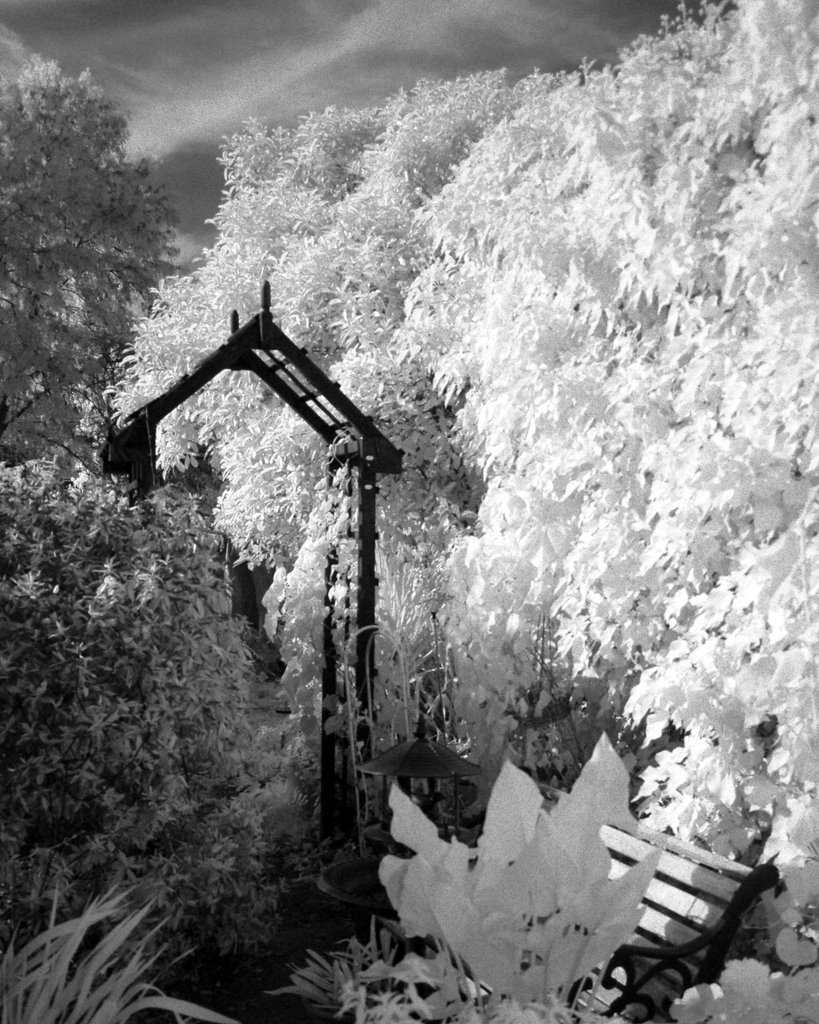
I recently bought a new camera: a bottom of the range Nikon D50 digital SLR. I thought I would have a play around and try a few things that I could not do with a copmact camera. This photo was taken trhough an Infrared filter and converted to black and white so as to get the effect I would have had I shot with infrared film. Not much of a pic maybe but I sort of like it

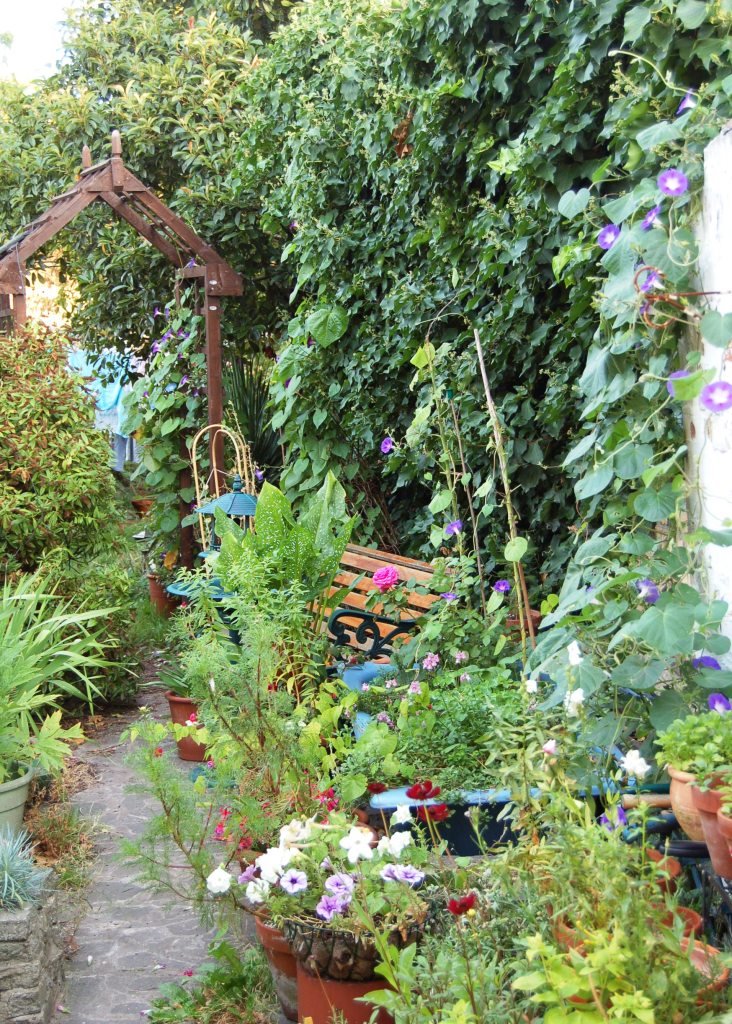
Garden 10 September


This is proof positive that the camera can lie or at least distort. Move just a little to the left and you would see a crappy shed that is overdue for demolition and a pile of waste that needs to be composted. Even so it gives us a lot of pleasure to see so much in bloom when most other things are in decline.

09 September 2006

Garden 9 September

Chocolate Cosmos

Fucshia magellanica

Morning Glory


The garden starts to decline somewhat from late July onwards as the "big ticket" items like the Cephalaria and the Echinops bloom and fade but there is still a lot of flowers in bloomespecially nearest the house where we have a number of containers. Some perennials, like the Fuchsias will soldier on in bloom until we get the first frosts so we will still have a few flowers well into October.

David Beresford on the Art of Contrition

Yesterday David Beresford posted an article called the Art of Contrition in the Guardian’s Comment is Free section. I had not noticed it until I was checking my visitor stats and I was puzzled to see a number of referrals from the article.

Mr Beresford had linked to an item I posted on 28 August called An Act of Contrition. This was about a former Aparthied era Law and Order Minister who washed the feet of Rev Frank Chikane, a man he allegedly tried to have murdered.

Given that Mr Vlok’s act was given widespread coverage I am surprised that a veteran
journalist would choose to link to what I wrote!. I’m not sure what to make of his using “washed the feet of a black man” as the link title though, even if it is factual, Ah well no publicity is bad publicity, except if you've just poisoned the Ugley Women's Institute!

One thing I hadn't noticed was that I had managed to lose the link to the Guardian article I quoted in "an act of contrition". I have now restored that link.


Stop Press... Charles Clarke to stay on backbenches until the Second Coming


This story is plastered across the national press to day so take your pick of sources. As ever I choose the trusty Guardian (if for no other reason that it is the first paper I read every day).

Charles Clarke seemed to throw away any chance of a return to the front benches any time this millennium by letting rip with an all-out attack on Gordon Brown, accusing him of "absolutely stupid" behaviour during the leadership crisis. The outburst seems to be the result of a long standing conflict between himself and Brown rather than anything else. Even so colleagues describe this intervention as baffling, unhelpful and ill-advised.

The former home secretary said MPs had been angered by pictures of Mr Brown grinning on Wednesday, at the height of the furore surrounding Mr Blair's future. "A lot of people are very upset and cross about that. It was absolutely stupid: a stupid, stupid thing to do," he said. "What he should have done was come out strongly and distance himself from [backbench rebels]. He could have done that with a click of his fingers. This has been complete madness." He went on to tell today's Daily Telegraph that Mr Brown was a "control freak" who might lack "the bottle" to become prime minister.

Allies of Mr Brown have quite rightly refused to take the bait: "Charles is naturally provocative, but I don't think his remarks will be welcomed by anybody bar the Tories. I don't think he is easy to put up to things; he's very independent-minded," said one minister supportive of Mr Brown. A Blairite colleague added: "Charles is just doing his own thing in his own way; he is not part of a concerted effort. He's kicked both Tony and Gordon recently."

Mr Clarke also attacked the prime minister for a failure of leadership after being sacked as home secretary. The timing of that criticism - shortly before the local elections in May - did not win him friends; one MP yesterday labelled him "petulant". The former home secretary has always retained his independence from the prime minister, and several colleagues thought he might be hoping to return to government under Mr Brown's leadership. One Blair loyalist said yesterday: "I'm surprised by the strength of what he said"

In the meantime, according to an opinion poll in today’s Independent Labour is now seen as being more divided than the Tories during the John Major years. The survey found that 56 per cent of voters see Labour as more divided than the Tories during the Major government, which was racked by bitter divisions over Europe. Only 22 per cent regard Labour as more united. More than a quarter of Labour supporters (27 per cent) believe that Labour is more divided than the Conservatives were in 1992-1997.

The poll also found strong evidence that the public will want an early general election after the change of prime minister. Seven out of 10 people think there should be an election within a year. Some 35 per cent think the new Prime Minister should seek a fresh mandate immediately, with a further 35 per cent believing that he should do so within six months to a year. Only 18 per cent believe the election should be delayed beyond that.

There is logic in linking the two articles: Clarke has shown himself to be an utter fool to talk as he did. It almost certainly consigns him to political oblivion – Even if a Blairite such as Alan Johnson became the next PM would he want such a loose cannon aboard? Far worse, it provides further confirmation to the public that we are utterly disunited.

As for the poll, we party members can scoff at the fickle nature of public opinion but we know full well that it does not take much for public perceptions to become so entrenched that no evidence to the contrary will shake them. We are seen as dangerously divided and unless we can get our act together now, then Cameron will be PM after next. Is that what we really want? The Labour Party is a party of Government. Let’s keep it that way!

Do we need a general election as soon as we have chosen our new leader? No. The 2005 result gives Blair’s successor a mandate to govern. I only hope that Blair's successor does better than Callaghan and Major did in 1979 and 1997 respectively...


08 September 2006

Robyn

This is Robyn our Alpha cat. He's the one that intimidates interlopers - something made easier by the fact that he is a large cat by any standard.


My contribution to the Friday Ark and the current Carnival of the Cats

06 September 2006

Ahmadinejad commits himself to further liberalization of Iranian society……….

Mahmoud Ahmadinejad made further progress in his plan to reinvent Iran as a liberal secular democracy yesterday by calling for a purge of "liberal and secular" academics in the universities."Today students should protest and shout at the president asking why some liberal and secular professors are still present in the universities," he told a gathering of young scientists. "Our educational system has been under the influence of the secular system for 150 years. Colonialism is seeking the spread of its own secular system." While acknowledging it was difficult to change this system, he said: "Such a change has begun."

Mr Ahmadinejad also said his government had tried to reduce the political influence of university chancellors, many of whom were seen as pillars of the reformist government of his predecessor, Mohammad Khatami. "A political predominance existed among many of the university chancellors but we have tried to reduce it because we don't believe chancellors should enter into politics at all," Mr Ahmadinejad said.

His latest comments will intensify fears among student and faculty members of an incipient crackdown. In recent months, several student activists have been imprisoned and dozens of liberal lecturers forced to retire before the statutory age. Last year, Mr Ahmadinejad appointed a radical cleric as chancellor of Tehran university, the country's most prestigious institution.
The government has also buried "martyrs" from the 1988 Iran-Iraq war in some universities in what activists see as an excuse to allow security forces on to campuses to keep watch on the student body. Iran's Islamic authorities have kept universities under close surveillance since a wave of student protests demanding greater freedom in 1999. A student leader, Akbar Mohammadi, died in jail in July after a hunger strike started in protest at being reimprisoned following a long-term release on medical grounds.

But Professor Sadegh Zibakalam, a political scientist at Tehran university, dismissed suggestions of an imminent purge. "Ahmadinejad is a populist trying to create a charismatic image for himself," he said. "These comments are aimed at those who voted for him and perhaps designed to divert attention from Iran's economic problems. They don't mean there is an orchestrated plot against more liberal lecturers."

Perhaps this is all “harf” (empty words) but it does sound as if he is looking to consolidate further his position by removing sources of potential opposition

Recreating the Turing Bombe

The Turing bombe

The BBC is carrying a story concerning the recreation of the Turing Bombe a machine that was used to decipher German messages during WWII. This will be the first tine a bombe (operational or not) will have been seen since the end of the war - Churchill ordered their destruction to ensure they did not fall into the wrong hands.

The replica will be shown at Bletchley Park in Bucks, the site of “Station X” where the original codes were cracked from next July. About 10,000 people worked at Bletchley Park at the height of the war - mostly from the Women's Royal Naval Service. One former employee was 82-year-old Jean Valentine, who described how the original machines "worked beautifully" and sounded like "lots of knitting machines". She said all of the employees at the code-breaking station worked on a "need to know basis. I knew what I was doing but I didn't know what anyone else was doing."

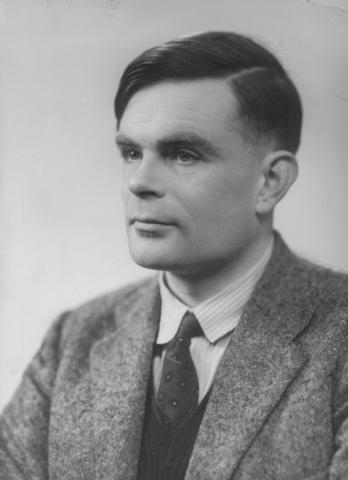
Alan Turing

The code-breaking machine - known as the Turing Bombe - was developed by the mathematicians Alan Turing and Gordon Welchman based on an earlier effective machine designed and used to great effect by Polish intelligence before WWII. It is thought the intercepted messages helped the Allies to defeat the Nazis in several crucial battles - so shortening the war by as much as two years. Simon Greenish, director of Bletchley Park Trust, said the war-time facility was "one of the 20th Century's great stories. What was done at Bletchley has affected all our lives in one way or another because World War II would not have ended when it did if it wasn't for Bletchley”

The reconstruction project will be open to the public from July 2007.

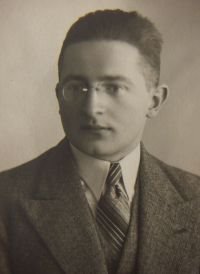
Marian Rejewski

Wwe will never know if the war would have lasted until 1947 without the contribution of the men and women of Station X. What is certain: they men and women of Station X would not have been possible without the work of Polish Intelligence before WWII. Mathematicians like Marian Rejewski had cracked an earlier version of Enigma and if it wasn’t for their “bomba” then there probably would have been no Turing Bombe. This does not take anything away from Alan Turing. It merely shows that few things are created from first principles, rather inventors generally take forward and improve on what is already in existence.

Further Reading

Alan Turing
Bomba Kryptologiczna
Enigma
Virtual Bletchley website


04 September 2006

Steve Irwin


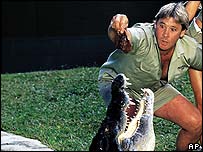
It's just been reported that Steve Irwin, the Crocodile Hunter, was killed by a stingray barb while filming a documentary on the Great Barrier Reef. (Source Sydney Daily Telegraph)

The barb apparently hit Mr Irwin in the chest, piercing his heart. The Stingray barb is coated in toxic material and would ahve had an effect like a bayonet.

I suppose it is an appropriate death for a man who always seemed to have boundless enthusiasm for wildlife . Somehow another form of death would not have been fitting.

03 September 2006

Disease(s) - Past

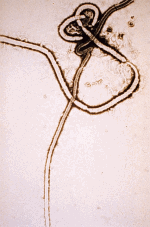
A second article in today’s Observer concerns the destruction of Mexico’s population following the arrival of the Conquistadores. The massive fall is usually blamed on the introduction of diseases to which the native population had no resistance. Epidemiologist Rodolfo Acuna-Soto suggests that much of the damage could have been done by a local haemorrhagic fever not unlike the Ebola virus. There has been a similar argument in Europe over the cause of the Black Death.

The Smallpox Virus

Estimates of the population of Mexico before the Spanish conquest range from 6 million to 25 million; by 1600, it was just 2 million. While there were indeed terrible smallpox and measles epidemics in the 1520s and 1530s, Acuna-Soto suggests that two later destructive epidemics in 1545 and 1576 do not appear to be accounted for by imported diseases. Acuna-Soto's conviction that these epidemics - called cocoliztli - were caused by a haemorrhagic fever is partly based on the observations of Philip II's physician. 'Blood flowed from the ears and in many cases blood truly gushed from the nose,' Francisco Hernandez wrote. 'The tongue was dry and black. Enormous thirst. Urine the colours of sea green, vegetal green, and black'.

A little digging around the internet and I find that this story is hardly hot news. An article in the February edition of Discover magazine sets out Acuna’s hypothesis in greater detail.

Acuña-Soto’s studies of ancient documents revealed that the Aztecs were familiar with smallpox, perhaps even before Cortés arrived. They called it zahuatl. Spanish colonists wrote at the time that outbreaks of zahuatl occurred in 1520 and 1531 and, as many as 8 million people died from those outbreaks. But the epidemic that appeared in 1545, followed by another in 1576, seemed to be another disease altogether. The Aztecs called those outbreaks by a separate name, cocolitzli. "For them, cocolitzli was something completely different and far more virulent," Acuña-Soto says. "Cocolitzli brought incomparable devastation that passed readily from one region to the next and killed quickly."

Medical historians insisted that the cause of this affliction could only have been a European disease. But Acuña-Soto felt that it made no sense, that the Aztecs had invented a new name for smallpox. He also noticed that previous researchers had to pick and choose among the disease reports to make them fit a diagnosis of smallpox or typhus. Finally he also could not understand why Old World diseases would cause massive deaths 20 years and then 55 years after the arrival of the Spanish. "By this time," he says, "those who survived the earlier epidemics would have had immunities or would have passed them on."

If cocolitzli had been caused by a hemorrhagic virus, Acuña-Soto realized, the Spanish could not have brought it with them. Such diseases do not readily pass from one person to another, so the virus must have been native.

This raised two serious questions – First: were people prepared to absolve the Spanish of (at least partial) responsibility for one of the great evils of the colonial era? Second: If the Spanish didn't bring about the cocolitzli, what did?

For the Aztecs, as for any agricultural society, rainfall was so important that it was well recorded in their surviving codices. The Valley of Mexico in which the Aztecs lived was not easy land to farm. The rains, only 30 to 40 inches a year, come between May and October. There are frequent late and early frosts that can kill maize crops. It is no surprise that the codices all bear witness through evocative pictographs of heavy rains, frosts, or—more telling—catastrophic droughts. Acuña-Soto saw that each of the cocolitzli epidemics appeared to be preceded by several years of drought. He also found that the epidemics didn't happen during the drought. They appeared only in the wet periods that followed. That was the crucial clue he had missed: It was raining when people got sick.

Evidence from Dendrochronology shows that during the 16th century central Mexico not only lacked rain but also suffered the most severe and sustained drought in 500 years, one that encompassed nearly the entire continent. Moreover the tree-ring records show wet interludes setting in around the years 1545 and 1576, the years of the cocolitzli. With the climate data in place, Acuña-Soto could piece together a plausible explanation of those epidemic years.
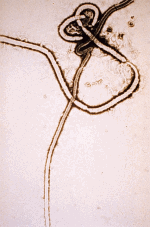
The Ebola Virus

Cocolitzli had been caused by a hemorrhagic fever virus that had lain dormant in its animal hosts. Severe drought would have contained the host population, forcing them to hole up wherever they could find water. Initially, only a small percentage may have been infected, but when forced into close quarters the virus was transmitted to others. When the rains returned, the hosts quickly bred and spread the virus as they came into contact with humans. Once infected, humans transmitted the virus to one another through contact with blood, sweat, and saliva.

Hemorrhagic viruses affect human populations that are already stressed, Acuña-Soto says. "The natives were poor and probably near starvation and living in unsanitary conditions where the rats would congregate. They also worked in the fields, where they'd be exposed to the rat droppings.

Elsa Malvido, a historian from Mexico's National Institute of Anthropology and History, dismisses the idea. She believes the later epidemics were bubonic plague spread by black rats from Europe. 'They were more extreme because they were attacking people with no immunity,' she said.

There has been a debate in Europe over the cause of the Black Death in 14th Century Europe. In 1894, two scientists, Alexandre Yersin and Shibasaburo Kitasato, independently identified the rod-shaped bacterium responsible for an epidemic of bubonic plague sweeping out of China.

Yersinia pestis

Yersin soon linked the Black Death to the bacterium, named Yersinia pestis. Since then historians and scientists have strengthened the argument that bubonic plague was responsible for Black Death and similar outbreaks in medieval Europe. But other experts have expressed doubts, largely on account of the difficulty of identifying a disease based on the few medieval descriptions of the Black Death that have survived.

Two researchers from the University of Liverpool presented a new theory in 2001 arguing that a hemorrhagic virus, like Ebola, probably caused the Black Death and most of the smaller epidemics that struck Europe for the next three centuries, not bubonic plague. They argued that Bubonic plague is a disease of rodents and Europe had no rodent species that could harbor the disease between outbreaks. In addition the rats that passed the plague through fleas to humans during epidemics all died so the plague would have perished with them.

Samuel K. Cohn, a professor of medieval history at the University of Glasgow, agrees that other diseases are better candidates for the Black Death than Yersinia pestis but feels that an Ebola-like virus would burn out too quickly to produce the widespread mortality seen.
Most epidemiologists, however, argue that the evidence points most strongly toward the bubonic plague pathogen as the cause of the Black Death. Bubonic plague can take three forms in people, and those forms can account for the descriptions of Black Death symptoms. In addition French researchers reported that they had found Yersinia pestis in the dental pulp of three people buried in Montpellier, France, in the 14th century. "Medieval Black Death was the plague," they declared.

Some scientists suggest that more concrete evidence - for example, finding Yersinia pestis in the remains of victims from northern Europe and England - is needed to settle the question of what caused the Black Death. Perhaps the overall position is best summed up by Dr Joshua Lederberg an emeritus professor of microbiology and a Nobel laureate in medicine at Rockefeller University: "Yersinia still seems to me the most reasonable assignment as the cause of the Black Death, but I say that with less than unshakable conviction."