16 September 2006

Geranium versicolor


Taken this afternoon, this is the second bloom of this species geranium. As geranium flowers go this is small, perhaps only half an inch (about 12mm) across. It goes to show beauty can come in small packages

A little common sense about Gibraltar


Today’s Times reports that the UK is set to sign a three-way agreement with Spain and Gibraltar that will lift the last vestiges of the blockade imposed by General Franco on the colony four decades ago. After nearly 2 years of talks the three parties are due to release a joint communiqué on Monday resolving a number of issues that have long nettled both sides.

It is expected that the agreement will ease restrictions on Gibraltarians including the resumption of the first direct flights between Spain and Gibraltar since 1979. The pact should prove a boon to the regional economy on both sides of the border. “For the finance industry the whole thing is good news,” Marcus Killick, the financial services commissioner of Gibraltar, said. Meanwhile the town of La Línea should benefit from easier access to Gibraltar’s jobs and consumers. Several thousand Spaniards also cross into Gibraltar every day to work. Peter Caruana, the Chief Minister of Gibraltar, says the agreements that have emerged from the first three-way talks represent “a huge sea-change in the nature of the relationship” with Spain. “It does signal a different and much more enlightened political engagement that you expect from European neighbours in the 21st century,”

For older Gibraltarians any sign of a rapprochement with Madrid is greeted with apprehension. Even those who support normalising relations with Spain know that it will be a tough sell for suspicious Gibraltarians. “What has been achieved is, in my view, historic,” Bruno Callaghan, a former president of the Gibraltar Chamber of Commerce, says. “But now it’s here many people will say, ‘Do we want it?” So far the Opposition in Gibraltar has held fire. The Leader of the Opposition and twice Chief Minister remains sceptical about Spain’s motives. “I don’t expect that the Spanish have had a change of heart and are giving away something for nothing,” he said. “It’s not in their history, it’s not in their character.”

Previous efforts by Britain and Spain to resolve their 300-year-old dispute over Gibraltar have foundered on opposition by its 30,000 residents, who oppose Spanish rule. In a 2002 referendum almost 99 per cent of Gibraltar’s voters rejected a proposal by London and Madrid for joint sovereignty over the territory. The idea was subsequently shelved, and both sides came to accept that Gibraltarians must be part of any negotiations over the future. “If it works it will be the watershed moment in Gibraltar’s relationship with Spain,” Dominique Searle, the editor of the Gibraltar Chronicle, said. “For me it’s the best news that I’ve had on this issue in a long time.”

Gibraltar has been a British possession since it was ceded by Spain in the 1713 Treaty of Utrecht which ended the War of the Spanish Succession. Although Spain has retained its claim over the Rock, unlike the erstwhile Argentinian junta, it has not resorted to military means (or not outside the frequent wars between the two nations during the 18th Century anyway!).

Strategically the Rock was of vital importance to Britain In WWII it ensured allied access to the Mediterranean. Had Franco joined the Axis (as was a distinct possibility) then Gibraltar may well have fallen. If this had happened then the Middle East would almost certainly have fallen to Germany. The outcome of WWII would almost certainly have been very different. In recent years, however, its strategic value has reduced and the British military presence has reduced accordingly. The main force on the Rock is the Royal Gibraltar Regiment, a small territorial army force.

While There is now less of an imperative to retain Gibraltar as a possession the population is steadfastly wish to remain British. The Gibraltarians are not a group of expatriates lording it over a “native” population. Gibraltarians are a diverse mix of Maltese, British, Spanish and North African. As with the Falkland Islanders their views must be taken into account when considering the future of Gibraltar. The removal of petty restrictions will be good for Gibraltar and for Spain but it should not be construed as the first step towards a transfer of sovereignty. It would take a very long time for the residents to come around to such an idea, if they ever do.

15 September 2006

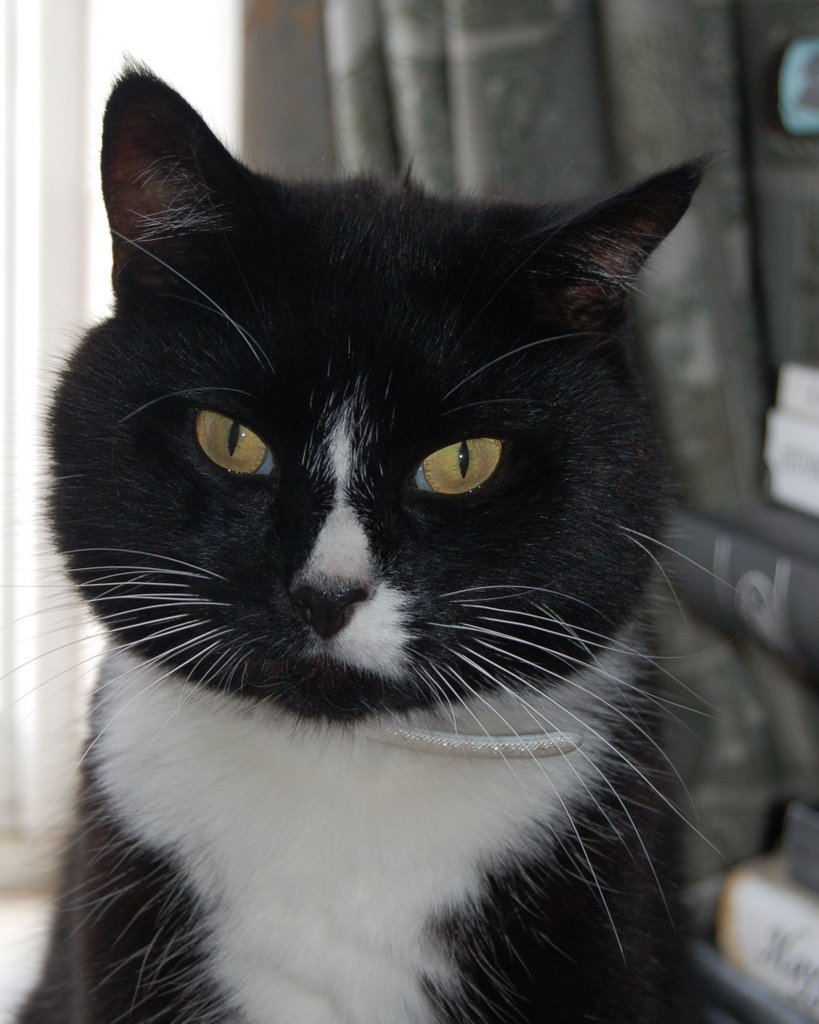
The two faces of Ted

Good Ted


Bad Ted

This is an early post for the Friday Ark and of Course Carnival of the Cats - see side bar for links

13 September 2006

Lysistrata in Colombia

I have no idea whether it is another apocryphal tale but this story appeared in today’s Guardian and elsewhere. I like the idea of thugs being told “make war and you don’t make love!” It is an idea that has so many applications

Gang members in Pereira, one of Colombia's most violent cities face an ultimatum: give up guns or give up sex. In what is being called a "strike of crossed legs” the wives and girlfriends of gang members have said they will not have sex with their partners until they hand over their weapons to authorities and sign up for vocational training offered by the mayor's office.

Pereira, a city of 300,000 people, has Colombia's highest murder rate at 97 per 100,000 inhabitants.

The Worst Possible Tribute to Steve Irwin


This story is all over the press here. I hope it proves to be apocryphal. The death of Steve Irwin has apparently motivated some to wreak revenge. Eight days after he was killed in a freak encounter with a stingray authorities are investigating the possibility that the species that took Irwin's life is being targeted in acts of retribution - Up to 10 apparently mutilated stingrays have washed up in coastal waters since his death,.

"We do find dead stingrays with their tails cut off from time to time. People usually do it if they are worried about getting stung by a stingray, or they just do it maliciously, but it is pretty rare," said Wayne Sumpton, a senior biologist in Queensland's fisheries department. "We do not know if these incidents are motivated by Steve Irwin's death. At the moment that is just speculation."

Killing stingrays, said Michael Hornby, executive director of Irwin's conservation group Wildlife Warriors, is "not what Steve was about.We are disgusted and disappointed that people would take this sort of action to hurt wildlife," he said. "It may be some sort of retribution, or it may be fear from certain individuals, or it just may be yet another callous act toward wildlife"


Spider and Wasp


A Garden Spider with what looks like the remains of a wasp. It really is the season for spiders. There are webs everywhere in the garden. I am glad I am not an arachnophobe

12 September 2006

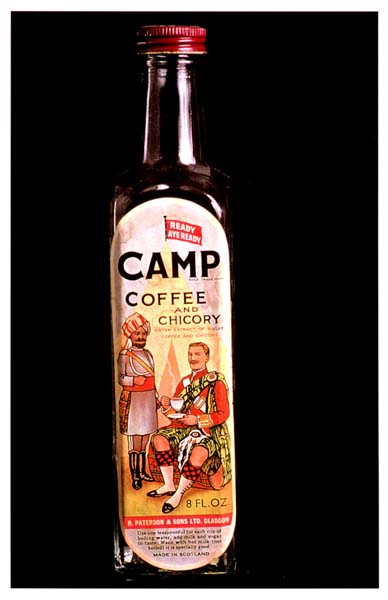
Fighting Mac, homosexuality and camp coffee


This interesting but squalid story from the Days of the British Empire appeared in Independent. It is a story I had never heard before.

When the inventors of Camp Coffee needed an image to market their new product 121 years ago, it seemed little could do the job better than a Scottish soldier sitting down for a brew in a far-flung corner of empire. To ensure Victorian consumers got the message that they were drinking the same treacly caffeine concentrate designed to fortify soldiers subduing the colonies, the kilted Gordon Highlander was shown being brought his drink by a Sikh manservant. Over the past century, the relationship between manservant and master changed to reflect attitudes towards the colonial era: by the 1980s, the Indian servant had lost his tray; a new label will now show the Sikh soldier sitting beside his former boss - and with a cup and saucer of his own.
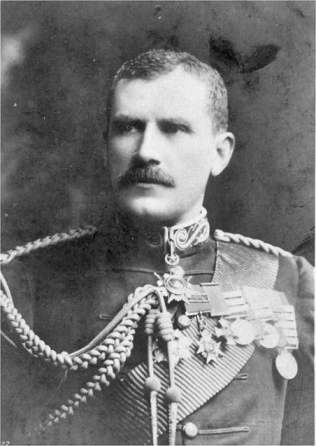
Times and attitude rightly change but the Victorian soldier remains constant. The image is based on a Victorian military hero, Major General Sir Hector Macdonald, an ordinary soldier who turned down a Victoria Cross in favour of a commission and attained high rank. That the man who was known as "Fighting Mac" is now forgotten is evidence of a fall from grace which ended in him taking his own life after a whispering campaign suggesting he was a homosexual. Macdonald, shot himself in the head in his bedroom in a Paris hotel on 25 March 1903, apparently minutes after reading a front-page story in the New York Herald suggesting he faced a "grave charge".


Hector Macdonald was born in 1853 in Dingwall, Scotland to a crofter and a dressmaker. He was an apprentice draper when he persuaded a recruiting sergeant from the Gordon Highlanders to accept him for training at the age of 17. A professional soldier he spent most of his 33 years in the Army in the outer reaches of the empire was held in such esteem by some of his compatriots was proof at least of a popular reputation built on stories of his talents as a military tactician and bravery as a commander.

While serving in Afghanistan in 1879 as a regimental sergeant, he distinguished himself in battle to the extent that he was given the choice of a Victoria Cross, the ultimate military accolade, or a rare commission as an officer. He is reputed to have accepted the commission with the words: "I shall win the medal later." Macdonald was credited with saving Lord Kitchener's imperial army at Omdurman - the Dervish stronghold across the Nile from where General Gordon of Khartoum was killed. At the head of his highly trained brigade of Sudanese troops, Macdonald repelled a counter-offensive by 20,000 Dervishes with the loss of only 48 men and 382 wounded. A young Winston Churchill, reporting on the battle, wrote how, at one point in the battle, Macdonald called his officers around him and rebuked them for "having wheeled into line in anticipation of his order and requested them to drill more steadily".
MacDonald was appointed military commander in Ceylon (now Sri Lanka) in 1902. A letter, printed in The Times of Ceylon shortly after he said: "You know, we heard a whispered rumour that he does not like ladies, and possibly may have been pleasantly surprised to find he had dropped on a spicy little isle where ladies are few and far between.”

Although well-loved and respected by his subordinates, it is suggested that the jealousy of his superiors boiled over in Ceylon in 1902 when he yelled at the Governor, Sir West Ridgeway, to get off his training ground during manoeuvres. It was Ridgeway's reports back to London which resulted in the decision that he should face a court martial. Others suggested that Lord Kitchener, leader of the British Army Sudan, ordered a whispering campaign against the general after he was humiliated by Macdonald's brilliant rearguard action in the Battle of Omdurman in 1898.
The accusation was one of homosexuality, an offence considered extremely serious and in keeping with the mores of his era, Macdonald decided even the allegation was a death sentence. Such was his status in Britain that news of the circumstances of his death brought an immediate backlash from a doubting civilian population. The establishment was forced to offer the family of the dead general a full state funeral when his previously unknown wife, Edinburgh-born Christina Duncan, arrived in Paris with their young son to collect her husband's body.

Even after death, the besmirched general continued to have a hold on the popular imagination. Rumours swirled around that, tired of his treatment by the Army, Macdonald staged his suicide to assume the identity of a German cousin, August von Mackensen, who was of a similar age and reported as being "gravely ill" at the time of the suicide attempt. Von Mackensen, who rose to the rank of field marshal in the Prussian army, miraculously recovered and suddenly discovered military skills he had not previously possessed. German propagandists wasted little time in perpetuating the idea of a betrayal by Macdonald in leaflets dropped behind British lines during the First World War.

What may have been seen as normal in the Victorian era seems so inappropriate in our time. That is not political correctness but our perception of the world. The story of Sir Hector Macdonald a sad one but the biggest shock of all is that anyone actually drinks the dam stuff!

Check here and here for more information on Sir Hector Macdonald.


11 September 2006

Donald Robson


On the fifth anniversary of 9/11 volunteer bloggers will come together to write a short tribute to each of the 2,996 victims of that awful day. Although I live an ocean away from New York I am proud to be a participant and to honour the memory of Donald Robson who died in the World Trade Center.

Donald Robson, aged 52, of Manhasset, New York was a partner and bond broker for Cantor Fitzgerald. Raised in Toronto he had spent the last two decades in New York and had also been present at the 1993 tower bombing. He is survived by two sons, Geoff and Scott. A kind man and a great father, he was one of 24 Canadians to die on 9/11 and one of the 658 victims from Cantor Fitzgerald.

My thoughts are with Donald’s family and friends on the anniversary of this terrible act, a senseless and evil act that brought short so many lives. May he rest in peace.

Please check this link to 2,996 for tributes to the other victims of 9/11.