The recent furore over a manipulated photograph of Beirut was utterly justified but is absolutely nothing new. The only difference between modern photographers and those in years gone by is the easy availability of computer software to do the donkey work.
Geoff Dyer has written an illuminating article in today’s Observer reminding us that photo manipulation has been taking virtually place since cameras were invented
The camera is the eye of history,' declared Matthew Brady, who took some of the best-known photographs of the American Civil War. Actually, there is no direct source for the quotation. Also, because of his poor eyesight, Brady himself didn't take many of the photographs commonly attributed to him. A number of 'his' pictures were actually taken by the team working for him. Still, we see what he meant: the camera shows what really happened, for the benefit of posterity. Philosophers might debate what 'really' really means but most people agree that a photograph, unlike a drawing or painting, 'quotes' directly from reality - hence its power as evidence.
Last week, the reliability of this form of evidence was again called into question when it was revealed that the picture of an Israeli air strike on Beirut had been manipulated by the photographer, Adnan Hajj. Smoke had been added, using Photoshop, to increase the scale and intensity of the destruction, Hajj insisted he'd only been trying to clear dust from his image - by adding more? - But Reuters immediately withdrew the picture and announced that it would no longer accept work from him. While taking advantage of the latest technology, it is part of a tradition almost as old as photography itself.
Some of Brady's Civil War work was actually done by Alexander Gardner who, in 1863, took a picture of a dead rebel sharpshooter at Gettysburg. It's a great photograph, well worth the effort of dragging the corpse 40 yards, propping its head on a knapsack (so that it faced the camera) and leaning a rifle (not the sharpshooter's, but one Gardner carried as a prop) against the barricade for dramatic effect.
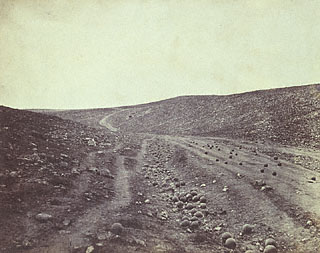
Eight years earlier, in the Crimea, Roger Fenton photographed the cannonball-strewn aftermath of the Charge of the Light Brigade. The picture was an immediate success, underscoring the heroic sentiments of Tennyson's poem, even though it was not actually this valley that the Light Brigade had charged down. Not only that, but Fenton did two versions of the same scene, one in which the cannonballs lay as they were found; another - the one always reproduced - in which the cannonballs, had been more dramatically and abundantly 'scattered' by the photographer's assistants.
In both these early examples, the raw material has been adjusted in such a way as to enhance a more general truth (a poetic one, in Fenton's case). This kind of thing went on throughout the 20th century - Robert Capa's claim to have caught the moment of a republican soldier's death in the Spanish Civil War is still disputed - and continues today as photographers exploit the poignancy of a child's death by nudging cuddly toys closer to a blood-stained hand. What is surprising, Sontag suggests, is not that this happens, but that we are surprised and disappointed to learn that it does.
A different kind of ethical blemish attaches to manipulating the picture after it's been taken. It is, in other words, not the scene itself so much as the record of the scene that is considered sacrosanct. If the communist habit of airbrushing undesirable elements such as Trotsky out of history provokes laughter rather than opprobrium, that is only because it is so ham-fisted. This was the practice that elicited Milan Kundera's famous declaration in The Book of Laughter and Forgetting: 'The only reason people want to be masters of the future is to change the past. They are fighting for access to the laboratories where photographs are retouched and biographies and histories rewritten.'
The difference, now, is that anyone with a computer has access to these laboratories. Photographs can be retouched with the press of a button, almost as soon as they are taken. History can be changed as it happens, before it's even written. While the existence of untouched originals or negatives offered a standard against which any subsequent alterations could be compared, the digital revolution has done away with the primacy of the original.
Does this mean that the idea of truth itself is being undermined? On the contrary. The attendant uncertainties reaffirm a basic human longing for accuracy and verifiability. The fact that pictures can be so easily manipulated greatly enhances the value of those that aren't. Hence the strict rules that news agencies such as Reuters and newspapers such as this one impose on their photographers.
Though long-frustrated, the urge to create an objective visual record made the eventual invention of photography inevitable. The subsequent urge to tamper with that record is no less predictable but consider, by analogy, the premise behind another technological innovation. If human beings weren't programmed to tell the truth as they see it, how could a lie-detector ever be expected to work?
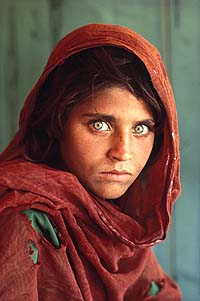
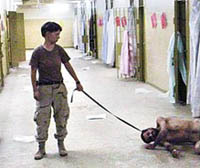
Even though a picture is now so easy to manipulate in my view it does not prevent an image from becoming iconic. I have set out below a few such photographs from the past plus a recent one that will sadly be one of those that sums up the invasion of Iraq. Photoshop aside there will still be great photographs in the future.
Photoshop
photographs
manipulation
The title of this blog comes from a Gaelic expression -"putting on the poor mouth"-which means to exaggerate the direness of one's situation in order to gain time or favour from creditors.
13 August 2006
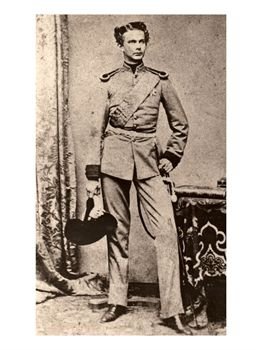
Mad Ludwig Not So Mad After All?

Staying with Germany for a third post Today’s Observer reports that King Ludwig II of Bavaria might not have been quite so loopy as thought: German scientists have shown him to be one of the unsung pioneers of flight.
Ludwig, whose fantastical castle at Neuschwanstein aptly featured in the film Chitty Chitty Bang Bang, drew up plans for a flying car more than two decades before the Wright brothers took to the air, but when he tried to build it he was declared insane and stripped of his crown. German aeronautical experts who have studied Ludwig's designs say they would have worked. Sketches recovered from letters between the ruler and Austrian engineer Gustav Koch show the monarch had planned to create a fleet of flying machines that would take him to his many castles. The craft he designed looked like flying cable cars powered by steam engines. They were decorated like peacocks.
But his dreams of flying over the mountains of Bavaria only convinced his opponents that he was mad, and he was declared insane on 10 June, 1886, and deposed. He died shortly afterwards and his drawings were consigned to an archive. Dalibor Karacic is working on the project to re-draw the machines. He said: "King Ludwig was unbelievably progressive. He understood technology. The flying peacock cars may have looked funny, but technologically they were sound and certainly would have worked".
Ludwig
Bavaria
mad
flying
machine
12 August 2006
Gunter Grass admits to being in the Waffen SS

Remaining on things German, the Guardian reports that Nobel laureate Günter Grass has admitted that he served in the Waffen SS in the second world war.
His declaration that he served in an army unit of Hitler's Nazi elite came in a book about his recollections of war to be published next month. Explaining how the secret weighed on his mind, he told the Frankfurter Allgemeine yesterday: "My silence through all these years is one of the reasons why I wrote this book. It had to come out finally."
Grass, 78, won international acclaim in 1959 with his first novel, The Tin Drum, voicing the thoughts of a generation raised in the Nazi era who had survived the war. This, and later works such as Cat and Mouse, and Dog Years, earned him the role of "conscience of his generation". He has since become part of the artistic movement known in German as Vergangenheitsbewaeltigung or "coming to terms with the past".
As a teenager, he volunteered as a way of breaking away. "For me it was primarily about getting out of home. It was like that for many of my generation. We were doing army service and then suddenly, one year later, the draft order was on the table. And then I realised, probably not until I was in Dresden, that it was the Waffen SS."
Writing on the 1945 surrender in the Guardian last year, Grass told of being wounded: "I was a naive 17-year-old, who had believed in the ultimate victory right to the end ... it was not the hour of liberation; rather, I was beset by the empty feeling of humiliation following total defeat."
I doubt Grass was much different to most other young germans of that age. He would have been steeped in Nazi propaganda for virtually his whole life and it would have been an exceptional sort to see through the lies. Let’s face it there were not many Sophie Scholls or Swing Kids. Still it will be interesting to read his memoirs when they are published here.
Gunter
Grass
Waffen
SS
Remembering the Berlin Wall

This article from today’s Independent is a dark reminder of the madness and sheer brutality of the East German communist regime.
Siegfried Noffke wanted nothing more than to be reunited with his wife and baby daughter. It was the summer of 1962 and less than a year earlier, the 22-year-old had been separated from his family by an event that took the world by surprise. On the night of 12 August 1961, armed units of Communist police and militiamen began cordoning off the eastern sectors of Berlin with barbed wire, and started reinforcing the divide with hastily erected breezeblock barriers. That was the beginning of Berlin's infamous Wall, the concrete and barbed wire Cold War barrier that divided Germany's biggest city for 28 years until its fall in the winter of 1989.
Noffke had been visiting relatives in West Berlin that evening. Like hundreds of others, he returned to a crossing point into East Berlin on the morning of 13 August but found it barred. His only chance of contact with his wife and daughter, left in the east, was to wave at them across the barbed-wire divide. He decided his only chance was to smuggle his family into the West. He joined a group that had started to dig a tunnel that aimed to break through under the Wall. When Noffke and his team broke through, they were met by East Germany's notorious Stasi secret police.
Noffke, one of the first out, was instantly machine-gunned to death. His colleagues were arrested and put on trial for "anti-state provocation". Unbeknown to the tunnel-diggers, a Stasi mole had joined the group and had kept the East Berlin authorities fully informed of their activities. Noffke's wife was jailed in East Germany for "anti-Communist conspiracy".
Then came scores of similar acts of murder perpetrated by the former East German authorities at the Berlin Wall. They were formally confirmed this week, The findings of extensive research by a German government-backed commission into deaths at the Berlin Wall has established that at least 125 people were killed trying to cross the barrier that divided the city during the Cold War. "These numbers are just the tip of the iceberg," said Hans-Hermann Hertle, a director of the commission organised by the Potsdam Centre for Historical Research. "The numbers are certain to rise, given that an estimated 100,000 people were jailed in East Germany for trying to flee to the West."
Statistics on the number of people killed at the Wall vary. Berlin's privately run Checkpoint Charlie museum puts the toll at 238 and estimates more than 1,000 people were killed at the Wall and in the heavily fortified and mined former East-West German border between 1961 and 1989. But even if the Potsdam commission's tally is conservative, the circumstances of its now officially confirmed Wall deaths make grim reading. In scores of cases, would-be East German escapers were shot dead at point-blank range or left in the no man's land between the Wall's fortifications to bleed to death from wounds inflicted by Kalashnikov assault rifles or machine guns.
The last person to be shot dead at the Wall was Chris Güffroy, a young East Berliner who decided to try his luck at escaping on 5 February 1989, months before the Wall finally fell. He had wrongly assumed the East German regime had suspended its order to shoot would-be escapers on sight. Yet Chris Güffroy was not the Wall's final victim. Four weeks later, 33-year-old Winfried Freudenberg died fleeing East Berlin in a gas-filled balloon. Freudenberg's balloon crashed in the West Berlin suburb of Zehlendorf and killed him instantly.
Berlin
Wall
11 August 2006
Ngugi wa Thiongo

Today’s Independent carries a long article about the great Kenyan author Ngugi wa Thiongo. His new novel Wizard of the Crow will be something I will be purchasing very soon.
Forces within Kenya have tried to silence Ngugi wa Thiong'o's voice twice. In 1977, the future president Daniel arap Moi threw him into a maximum-security prison without trial for co-authoring a play critical of the government. Ngugi was released one year later, only to discover that his teaching job had disappeared. He eventually left the country because of fear for his own safety in 1982.
For a while, it looked like he would never return. "Moi used to say, 'I can forgive anybody but Ngugi'," says the 68-year-old novelist today at his home in Irvine, where he is a professor of English at the University of California.. When Moi agreed to abide by term limits, and his hand-picked successor lost in the presidential elections, Wa Thiong'o realised that he had a chance to come home. It was good timing. Wa Thiong'o had just completed a six-volume satirical novel called Murogi wa Kagogo, a ribald satire of a fictional African dictator. It was also the longest novel ever written in his native Gikuyu language.
He decided to turn his homecoming into a book tour and lecture circuit. He and his second wife, Njeeri, had never been married in the traditional style, but most importantly they had never been to Kenya together as a family. "At the airport the crowds were there," he recalls, "some weeping, some holding onto books. All the newspapers headlined my talk."
"Some of the books were covered in dirt," his wife says. "Because they had to bury them - to hide them - when his books were banned." And then things went horribly awry. On 11 August 2004, intruders broke into the apartment where they were staying. "We felt that this was no ordinary robbery," Wa Thiong'o recalls. " Quite frankly, I think we were going to be eliminated."
They managed to escape that fate, but not without suffering. Wa Thiong'o's wife was stabbed and raped in front of him. When Wa Thiong'o tried to intervene, he was burned with cigarettes on his forehead and arms. The couple emerged from hospital a day later, and Wa Thiong'o issued a profoundly sad but generous statement. "We have to keep rising up," he said. "The Kenyans who attacked me do not represent the spirit of the new Kenya."
Wa Thiong'o has laboured to bring his magnum opus from Gikuyu into English - no small feat when the book runs to 766 pages. The novel is now published in Britain as Wizard of the Crow (Harvill Secker, £17.99).
Set in the fictional African republic of Aburiria, the novel conjures a ruler who has surrounded himself with comically sycophantic cabinet ministers. One has surgically enlarged his ears to prove he always has an ear to the ground; another has had plastic surgery on his eyes to show that he has his eyes on the public. For the ruler's birthday, this group suggests building a tower up to heaven so that the ruler can speak directly to God. For funding, Aburiria's majestically self-important ruler turns to the Global Bank for cash, but he must constantly fight against the mockery of the public. An underground resistance called Movement for the Voice of the People protests against his ceremonies, while long lines of unemployed workers betray his failure to provide for his people.
"When people talk about Africa," Wa Thiong'o says, "they often only talk about it through one lens - so they blame its lack of progress on its people, or its landscape. In this book I wanted to show everything - the influence of aid, the neocolonialism of capital, and how this affects things for the people."
At the crux of the resistance are a young beggar named Kamiti and a revolutionary he falls in love with, Nyawira. Kamiti discovers he has the capabilities of a seer when he sets up shop as a fictional wizard, dispensing advice to people who want to crush their enemies. Nyawira occasionally sits in for him when he cannot make his engagements.
Although the leader's Westernised suits recall Arap Moi's jackal dapperness, Wa Thiong'o insists that this is not just a novel about Kenya and the failures of aid. "I was drawing from lots of Third World dictatorships: I was thinking of Moi, but also of Mobutu, Idi Amin and Pinochet. They were all on my mind... In 1982, when I was exiled, I was based in London, and I worked on the committee for the release of political prisoners in Kenya. I worked closely with people from Chile, from the Philippines."
One thing Wa Thiong'o shared with them was the colonial experience. He was born in a small village north of Nairobi with the name James Thiong'o Ngugi and raised a Christian. He attended mission schools, where he read Robert Louis Stevenson. Like Wole Soyinka and Chinua Achebe, he left Africa and went to England for further study, earning a degree from Leeds. Returning to Kenya, he successfully petitioned the University of Nairobi to turn its English department into the Department of African Languages and Literature, soon after renouncing his birth name and taking on its version in Gikuyu. As he explained once: "Language is a carrier of a people's culture, culture is a carrier of a people's values; values are the basis of a people's self-definition."
Since 2003, Wa Thiong'o has been distinguished professor of the humanities and director of the International Center for Writing and Translation at Irvine. "What is so devastating in a dictatorship is the taking away of a voice," he says. And the prevalence of English in the world, he argues, has only sharpened that blade against the larynx of indigenous peoples. "It is not a balanced equation if all languages must come to English to mean something."
Wa Thiong'o began writing fiction in Gikuyu while he was in prison 30 years ago, scribbling on toilet paper, and has never turned back. This has made his job a little harder, even as the circumstances of writing Wizard of the Crow were much easier than before. "I began it in Orange, New Jersey, and I finished in Orange County," he says. And yet this book's flavour is anything but sweet.
Ngugi
Kenya
10 August 2006
Atrocity Foiled?
From the BBC
Flights out of the UK are today have been massively disrupted following an apparent disruption of a plot to blow up planes in flight from the UK to the US. It is thought the plan was to detonate explosive devices smuggled in hand luggage on to as many as 10 aircraft operated by United, American and Continental airlines.
Police are searching premises after 21 people were arrested. Home Secretary John Reid said had the attack gone ahead it would have caused a loss of life of "unprecedented scale". He said they were "confident" the main players are in custody, but neither the police nor the government is "in any way complacent".
The plot was thought to have involved a series of "waves" of simultaneous attacks, targeting three planes each time. He also said the plan "revolved around liquids of some kind".
Metropolitan Police Deputy Commissioner Paul Stephenson said the alleged plotters had intended "mass murder on an unimaginable scale. We are confident that we have disrupted a plan by terrorists to cause untold death and destruction and to commit, quite frankly, mass murder," he said. "We believe that the terrorists' aim was to smuggle explosives on to aeroplanes in hand luggage and to detonate these in flight. We also believe that the intended targets were flights from the United Kingdom to the United States of America."
According to BBC sources the "principal characters" suspected of being involved in the plot were British-born. There are also understood to be links to Pakistan. Despite the arrests the threat level had been raised "in case there is some other sub-plot, back-up plot around this that the police aren't aware of".
The Department for Transport set out the details of the security measures at UK airports. Passengers are not allowed to take any hand luggage on to any flights in the UK, the department said. Only the barest essentials - including passports and wallets - will be allowed to be carried on board in transparent plastic bags.
Some may accuse the government of scare tactics or perpetrating a ruse to facilitate a raft of more draconian anti terror laws. Such people would call me naïve or brainwashed but in the same way that I do not believe the government had any hand in 7/7 I do not believe they would pull a stunt like this. That does not mean the authorities do not get things badly wrong – de Menezes and the recent Forest Gate raid spring to mind.
aircraft
bombings
Flights out of the UK are today have been massively disrupted following an apparent disruption of a plot to blow up planes in flight from the UK to the US. It is thought the plan was to detonate explosive devices smuggled in hand luggage on to as many as 10 aircraft operated by United, American and Continental airlines.
Police are searching premises after 21 people were arrested. Home Secretary John Reid said had the attack gone ahead it would have caused a loss of life of "unprecedented scale". He said they were "confident" the main players are in custody, but neither the police nor the government is "in any way complacent".
The plot was thought to have involved a series of "waves" of simultaneous attacks, targeting three planes each time. He also said the plan "revolved around liquids of some kind".
Metropolitan Police Deputy Commissioner Paul Stephenson said the alleged plotters had intended "mass murder on an unimaginable scale. We are confident that we have disrupted a plan by terrorists to cause untold death and destruction and to commit, quite frankly, mass murder," he said. "We believe that the terrorists' aim was to smuggle explosives on to aeroplanes in hand luggage and to detonate these in flight. We also believe that the intended targets were flights from the United Kingdom to the United States of America."
According to BBC sources the "principal characters" suspected of being involved in the plot were British-born. There are also understood to be links to Pakistan. Despite the arrests the threat level had been raised "in case there is some other sub-plot, back-up plot around this that the police aren't aware of".
The Department for Transport set out the details of the security measures at UK airports. Passengers are not allowed to take any hand luggage on to any flights in the UK, the department said. Only the barest essentials - including passports and wallets - will be allowed to be carried on board in transparent plastic bags.
Some may accuse the government of scare tactics or perpetrating a ruse to facilitate a raft of more draconian anti terror laws. Such people would call me naïve or brainwashed but in the same way that I do not believe the government had any hand in 7/7 I do not believe they would pull a stunt like this. That does not mean the authorities do not get things badly wrong – de Menezes and the recent Forest Gate raid spring to mind.
aircraft
bombings
08 August 2006
In Praise of Essex Part 4 (well sort of) – Essex Man
Like Essex girl, Essex man is another well worn stereotype , Basically he is portrayed as a xenophobic Sun reader who drives a Dagenham dustbin (Ford to you), and is set on material gain (and minimal taxes): In the eighties Essex Man was at the (white)vanguard of Thatcherism.
Being an Essex man myself (well Romford was still part of Essex when I was born), I consider it to be an unfair portrayal. Unfortunately there have been “Essex men” for centuries.
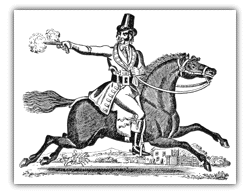
Dick Turpin
Change the Ford to a horse and the material gain to thuggery and highway robbery and you have Dick Turpin. Turpin was born in 1706 in rural Essex, the son of John Turpin, a small farmer and some-time innkeeper. Young Dick probably served an apprenticeship with a butcher in Whitechapel (later the hunting ground of Jack the Ripper). When his apprenticeship was over, he opened a butcher shop, and began to steal sheep, lamb and cattle. Caught in the act of stealing two oxen, he fled to Essex to save himself. He then tried his hand at smuggling, but proved as inept at this as he had at cattle rustling.
At this point Turpin was part of what was known as the Essex or Gregory Gang. The gang started raiding isolated farmhouses, terrorizing and torturing the occupants into giving up their valuables. Robbing remote farmhouses became the Gang's speciality, and it was only towards the end of his criminal career that Turpin was actually involved in highway robbery.
After the capture members of the gang Turpin returned to East Anglia where he began working with 'Captain' Tom King, one of the best-known highwaymen of the day.. One night, while on the road to London, he took a fancy to a particularly fine horse ridden by a man called Major. Mr. Major didn't take the loss lying down and the horse was finally traced to the Red Lion pub in Whitechapel. When Tom King came to collect the horse, he was arrested. Turpin, who had been waiting nearby, rode toward the constables holding King and fired at them. Unfortunately, he was a dreadful shot, and the bullets hit King rather than his captors.
Realising that he would not escape capture if he remained in the London area, Turpin set off for Yorkshire., where he settled under the name of John Palmer, financing his fancy lifestyle with frequent excursions into Lincolnshire for more horse and cattle rustling and the occasional highway robbery. One day, returning from an unsuccessful hunt he shot his landlord's rooster. When the landlord complained he threatened to kill the landlord and he was taken into custody. Things might not have gone badly for Turpin had he not written a letter to his brother, requesting him to 'procure an evidence from London that could give me a character’
Unfortunately for Turpin, his brother was too mean to pay the postage and returned the letter to the Post Office. By a great coincidence Turpin's former schoolmaster saw the letter recognised the handwriting. He took the letter to the local magistrate and, with his permission, opened it. Despite the fact that it was signed John Palmer the author was identified as Turpin. Convicted on two indictments, Turpin was sentenced to death and hanged in York in April 1739.
The legend of Dick Turpin as a dashing highwayman was sealed with the novel Rookwood (1834) by Harrison Ainsworth in which the highwayman 'Dauntless Dick Turpin' with his horse Black Bess is a secondary character. Ainsworth's description of an epic ride from Westminster to York caught the popular imagination and turned a fairly average pot-boiler into a runaway best-seller. History, romance, and legend rapidly blurred and, eventually, the fictional ride of Ainsworth's Turpin totally eclipsed the villain's real exploits. The metamorphosis of Dick Turpin, house-breaker, torturer, murderer, horse-stealer and all-round real nasty piece of work into Dick Turpin, Highwayman and Knight of the Road was complete.
For what it’s worth the great ride to York was actually made by a 17th-century highwayman John Nevison, who early one morning in 1676 robbed a homeward-bound sailor on the road outside Gads Hill, Kent. Deciding he needed to establish an alibi, Nevison set off on a ride that took him more than 190 miles in about 15 hours.
Source: Stand and Deliver
Dick
Turpin
Essex
Man
Highwayman
Being an Essex man myself (well Romford was still part of Essex when I was born), I consider it to be an unfair portrayal. Unfortunately there have been “Essex men” for centuries.
Dick Turpin
Change the Ford to a horse and the material gain to thuggery and highway robbery and you have Dick Turpin. Turpin was born in 1706 in rural Essex, the son of John Turpin, a small farmer and some-time innkeeper. Young Dick probably served an apprenticeship with a butcher in Whitechapel (later the hunting ground of Jack the Ripper). When his apprenticeship was over, he opened a butcher shop, and began to steal sheep, lamb and cattle. Caught in the act of stealing two oxen, he fled to Essex to save himself. He then tried his hand at smuggling, but proved as inept at this as he had at cattle rustling.
At this point Turpin was part of what was known as the Essex or Gregory Gang. The gang started raiding isolated farmhouses, terrorizing and torturing the occupants into giving up their valuables. Robbing remote farmhouses became the Gang's speciality, and it was only towards the end of his criminal career that Turpin was actually involved in highway robbery.
After the capture members of the gang Turpin returned to East Anglia where he began working with 'Captain' Tom King, one of the best-known highwaymen of the day.. One night, while on the road to London, he took a fancy to a particularly fine horse ridden by a man called Major. Mr. Major didn't take the loss lying down and the horse was finally traced to the Red Lion pub in Whitechapel. When Tom King came to collect the horse, he was arrested. Turpin, who had been waiting nearby, rode toward the constables holding King and fired at them. Unfortunately, he was a dreadful shot, and the bullets hit King rather than his captors.
Realising that he would not escape capture if he remained in the London area, Turpin set off for Yorkshire., where he settled under the name of John Palmer, financing his fancy lifestyle with frequent excursions into Lincolnshire for more horse and cattle rustling and the occasional highway robbery. One day, returning from an unsuccessful hunt he shot his landlord's rooster. When the landlord complained he threatened to kill the landlord and he was taken into custody. Things might not have gone badly for Turpin had he not written a letter to his brother, requesting him to 'procure an evidence from London that could give me a character’
Unfortunately for Turpin, his brother was too mean to pay the postage and returned the letter to the Post Office. By a great coincidence Turpin's former schoolmaster saw the letter recognised the handwriting. He took the letter to the local magistrate and, with his permission, opened it. Despite the fact that it was signed John Palmer the author was identified as Turpin. Convicted on two indictments, Turpin was sentenced to death and hanged in York in April 1739.
The legend of Dick Turpin as a dashing highwayman was sealed with the novel Rookwood (1834) by Harrison Ainsworth in which the highwayman 'Dauntless Dick Turpin' with his horse Black Bess is a secondary character. Ainsworth's description of an epic ride from Westminster to York caught the popular imagination and turned a fairly average pot-boiler into a runaway best-seller. History, romance, and legend rapidly blurred and, eventually, the fictional ride of Ainsworth's Turpin totally eclipsed the villain's real exploits. The metamorphosis of Dick Turpin, house-breaker, torturer, murderer, horse-stealer and all-round real nasty piece of work into Dick Turpin, Highwayman and Knight of the Road was complete.
For what it’s worth the great ride to York was actually made by a 17th-century highwayman John Nevison, who early one morning in 1676 robbed a homeward-bound sailor on the road outside Gads Hill, Kent. Deciding he needed to establish an alibi, Nevison set off on a ride that took him more than 190 miles in about 15 hours.
Source: Stand and Deliver
Dick
Turpin
Essex
Man
Highwayman
Umm... Errr....Welcome Home Dame Shirley

Today’s Independent reports that Dame Shirley Porter has returned to London after 12 years of self-imposed exile in Israel, Porter has bought a £1.5m flat in Mayfair close to the sumptuous Bayswater flat from which she masterminded a major gerrymandering operation during the 1980s.
The “homes for votes” affair was arguably the most scandalous case of political corruption in recent British history. It saw her convicted of selling council homes in marginal wards to prospective Tory voters. She was also found to have forced 122 homeless families likely to vote Labour out of eight marginal seats, forcing them instead to live in tower blocks that the council knew to be contaminated with asbestos.
At the time, Labour was threatening to take control of Westminster, which was seen as one of Tory flagship councils, following a near-victory in the 1986 elections. Following a district auditor's investigation in 1994, Dame Shirley was found guilty of wilful misconduct and gerrymandering, and ordered to pay surcharges of £31.6m to Westminster Council. This later rose to £42m with interest and legal fees.
She fled to Israel, which has no extradition treaty with the UK, and consistently refused to pay. Two years ago, Westminster, which is still run by the Conservatives, accepted £12.3m in settlement of her outstanding debt, and the case is now considered closed.
There is nothing to stop her returning to the UK but somehow I cannot imagine she will be anything but an unwelcome reminder of past Tory scandal. I doubt Cameron will be rushing to put her on his A list any time soon.
Shirley
Porter
Tory
Westminster
sleaze
Genocidaires Still in Suburbia
Genocidaires in Suburbia also refers. According to today’s Guardian, Amnesty International is urging the attorney general to prosecute two Rwandan genocide suspects living in Britain. Secretary general, Irene Khan, has written to the attorney general, Lord Goldsmith, expressing "grave concern" that the government has failed to take any action against two men who are among the top 100 Rwandan genocide suspects at large and living in Europe.
Charles Munyaneza, 48, was granted asylum in Britain in 2000 and lives with his family in a semi detached house in Putnoe, Bedford. Celestin Ugirashebuja, 55, lives in Walton on the Naze, Essex. Both were mayors of towns in southern Rwanda during the 1994 genocide, and are accused by the Rwandan prosecutor general of organising and directing the killings in their provinces. They both deny the charges.
Had they been investigated when they first arrived in the UK in 2000, the men could have been sent for trial to the International Criminal Tribunal for Rwanda (ICTR) in Tanzania. However, the tribunal has now been instructed by the UN security council to complete all trials by 2008.
Ms Khan said the British government should put appropriate legislation in place so as to be able to prosecute in this country in line with the UK's international obligations There are precedents for the UK to prosecute such suspects: last year an Afghan warlord, Faryadi Sarwar Zardad, 42, was convicted at the Old Bailey of taking hostages and robbing, beating, and shooting civilians at a checkpoint in Afghanistan 10 years ago.
Rwanda
Genocide
genocidaires
Munyaneza
Ugirashebuja
Charles Munyaneza, 48, was granted asylum in Britain in 2000 and lives with his family in a semi detached house in Putnoe, Bedford. Celestin Ugirashebuja, 55, lives in Walton on the Naze, Essex. Both were mayors of towns in southern Rwanda during the 1994 genocide, and are accused by the Rwandan prosecutor general of organising and directing the killings in their provinces. They both deny the charges.
Had they been investigated when they first arrived in the UK in 2000, the men could have been sent for trial to the International Criminal Tribunal for Rwanda (ICTR) in Tanzania. However, the tribunal has now been instructed by the UN security council to complete all trials by 2008.
Ms Khan said the British government should put appropriate legislation in place so as to be able to prosecute in this country in line with the UK's international obligations There are precedents for the UK to prosecute such suspects: last year an Afghan warlord, Faryadi Sarwar Zardad, 42, was convicted at the Old Bailey of taking hostages and robbing, beating, and shooting civilians at a checkpoint in Afghanistan 10 years ago.
Rwanda
Genocide
genocidaires
Munyaneza
Ugirashebuja
07 August 2006
Music Update

Although originally scheduled for release on 10 July, the new Hawkwind mini album Take Me to Your Future will now come out on 28 August. It will be a dual disc (CD one side, DVD on the other). The CD side will consist of five songs: the Reality of Poverty, Ode to a Time Flower, Small Boy plus re-workings of Uncle Sam’s on Mars and Silver Machine. The DVD side will contain a selection of concert performances. Full details have not been issued but it will include Utopia and Assassins of Allah.

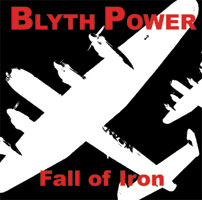
Last Friday saw the release of Fall of Iron by folk-punk band Blyth Power. Blyth Power are very much an acquired taste, in no small part due to the distinctive voice of singer/drummer Joseph Porter. Sadly the not-wife has never acquired the taste so I am forced to listen to them when she is not around; unless I want the CD inserted into a non playing slot!

Finally Robyn Hitchcock will be releasing his new album Ole Tarantula in October. Recorded with Peter Buck (of REM), Scott McGaughey and Bill Rieflin as the Venus Three it includes Adventure Rocket Ship, Ole! Tarantula and (A Man's Gotta Know His Limitations) Briggs which I have heard him play live and are excellent. Other tracks include NY Doll, the Museum of Sex and Underground Sun which was written for a friend of Hitchcock's who died last year. Hopefully he will be touring the album later in the year.
Hawkwind
Blyth
Power
Robyn
Hitchcock
Subscribe to:
Posts (Atom)