08 September 2006

Robyn

This is Robyn our Alpha cat. He's the one that intimidates interlopers - something made easier by the fact that he is a large cat by any standard.


My contribution to the Friday Ark and the current Carnival of the Cats

06 September 2006

Ahmadinejad commits himself to further liberalization of Iranian society……….

Mahmoud Ahmadinejad made further progress in his plan to reinvent Iran as a liberal secular democracy yesterday by calling for a purge of "liberal and secular" academics in the universities."Today students should protest and shout at the president asking why some liberal and secular professors are still present in the universities," he told a gathering of young scientists. "Our educational system has been under the influence of the secular system for 150 years. Colonialism is seeking the spread of its own secular system." While acknowledging it was difficult to change this system, he said: "Such a change has begun."

Mr Ahmadinejad also said his government had tried to reduce the political influence of university chancellors, many of whom were seen as pillars of the reformist government of his predecessor, Mohammad Khatami. "A political predominance existed among many of the university chancellors but we have tried to reduce it because we don't believe chancellors should enter into politics at all," Mr Ahmadinejad said.

His latest comments will intensify fears among student and faculty members of an incipient crackdown. In recent months, several student activists have been imprisoned and dozens of liberal lecturers forced to retire before the statutory age. Last year, Mr Ahmadinejad appointed a radical cleric as chancellor of Tehran university, the country's most prestigious institution.
The government has also buried "martyrs" from the 1988 Iran-Iraq war in some universities in what activists see as an excuse to allow security forces on to campuses to keep watch on the student body. Iran's Islamic authorities have kept universities under close surveillance since a wave of student protests demanding greater freedom in 1999. A student leader, Akbar Mohammadi, died in jail in July after a hunger strike started in protest at being reimprisoned following a long-term release on medical grounds.

But Professor Sadegh Zibakalam, a political scientist at Tehran university, dismissed suggestions of an imminent purge. "Ahmadinejad is a populist trying to create a charismatic image for himself," he said. "These comments are aimed at those who voted for him and perhaps designed to divert attention from Iran's economic problems. They don't mean there is an orchestrated plot against more liberal lecturers."

Perhaps this is all “harf” (empty words) but it does sound as if he is looking to consolidate further his position by removing sources of potential opposition

Recreating the Turing Bombe

The Turing bombe

The BBC is carrying a story concerning the recreation of the Turing Bombe a machine that was used to decipher German messages during WWII. This will be the first tine a bombe (operational or not) will have been seen since the end of the war - Churchill ordered their destruction to ensure they did not fall into the wrong hands.

The replica will be shown at Bletchley Park in Bucks, the site of “Station X” where the original codes were cracked from next July. About 10,000 people worked at Bletchley Park at the height of the war - mostly from the Women's Royal Naval Service. One former employee was 82-year-old Jean Valentine, who described how the original machines "worked beautifully" and sounded like "lots of knitting machines". She said all of the employees at the code-breaking station worked on a "need to know basis. I knew what I was doing but I didn't know what anyone else was doing."

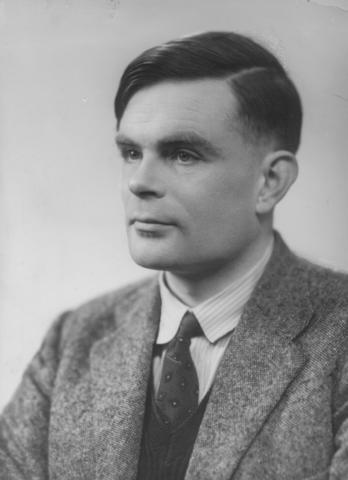
Alan Turing

The code-breaking machine - known as the Turing Bombe - was developed by the mathematicians Alan Turing and Gordon Welchman based on an earlier effective machine designed and used to great effect by Polish intelligence before WWII. It is thought the intercepted messages helped the Allies to defeat the Nazis in several crucial battles - so shortening the war by as much as two years. Simon Greenish, director of Bletchley Park Trust, said the war-time facility was "one of the 20th Century's great stories. What was done at Bletchley has affected all our lives in one way or another because World War II would not have ended when it did if it wasn't for Bletchley”

The reconstruction project will be open to the public from July 2007.

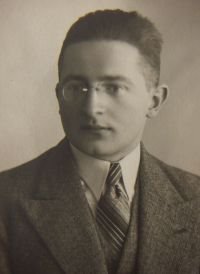
Marian Rejewski

Wwe will never know if the war would have lasted until 1947 without the contribution of the men and women of Station X. What is certain: they men and women of Station X would not have been possible without the work of Polish Intelligence before WWII. Mathematicians like Marian Rejewski had cracked an earlier version of Enigma and if it wasn’t for their “bomba” then there probably would have been no Turing Bombe. This does not take anything away from Alan Turing. It merely shows that few things are created from first principles, rather inventors generally take forward and improve on what is already in existence.

Further Reading

Alan Turing
Bomba Kryptologiczna
Enigma
Virtual Bletchley website


04 September 2006

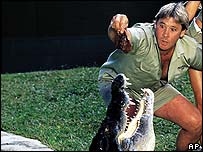
Steve Irwin


It's just been reported that Steve Irwin, the Crocodile Hunter, was killed by a stingray barb while filming a documentary on the Great Barrier Reef. (Source Sydney Daily Telegraph)

The barb apparently hit Mr Irwin in the chest, piercing his heart. The Stingray barb is coated in toxic material and would ahve had an effect like a bayonet.

I suppose it is an appropriate death for a man who always seemed to have boundless enthusiasm for wildlife . Somehow another form of death would not have been fitting.

03 September 2006

Disease(s) - Past

A second article in today’s Observer concerns the destruction of Mexico’s population following the arrival of the Conquistadores. The massive fall is usually blamed on the introduction of diseases to which the native population had no resistance. Epidemiologist Rodolfo Acuna-Soto suggests that much of the damage could have been done by a local haemorrhagic fever not unlike the Ebola virus. There has been a similar argument in Europe over the cause of the Black Death.

The Smallpox Virus

Estimates of the population of Mexico before the Spanish conquest range from 6 million to 25 million; by 1600, it was just 2 million. While there were indeed terrible smallpox and measles epidemics in the 1520s and 1530s, Acuna-Soto suggests that two later destructive epidemics in 1545 and 1576 do not appear to be accounted for by imported diseases. Acuna-Soto's conviction that these epidemics - called cocoliztli - were caused by a haemorrhagic fever is partly based on the observations of Philip II's physician. 'Blood flowed from the ears and in many cases blood truly gushed from the nose,' Francisco Hernandez wrote. 'The tongue was dry and black. Enormous thirst. Urine the colours of sea green, vegetal green, and black'.

A little digging around the internet and I find that this story is hardly hot news. An article in the February edition of Discover magazine sets out Acuna’s hypothesis in greater detail.

Acuña-Soto’s studies of ancient documents revealed that the Aztecs were familiar with smallpox, perhaps even before Cortés arrived. They called it zahuatl. Spanish colonists wrote at the time that outbreaks of zahuatl occurred in 1520 and 1531 and, as many as 8 million people died from those outbreaks. But the epidemic that appeared in 1545, followed by another in 1576, seemed to be another disease altogether. The Aztecs called those outbreaks by a separate name, cocolitzli. "For them, cocolitzli was something completely different and far more virulent," Acuña-Soto says. "Cocolitzli brought incomparable devastation that passed readily from one region to the next and killed quickly."

Medical historians insisted that the cause of this affliction could only have been a European disease. But Acuña-Soto felt that it made no sense, that the Aztecs had invented a new name for smallpox. He also noticed that previous researchers had to pick and choose among the disease reports to make them fit a diagnosis of smallpox or typhus. Finally he also could not understand why Old World diseases would cause massive deaths 20 years and then 55 years after the arrival of the Spanish. "By this time," he says, "those who survived the earlier epidemics would have had immunities or would have passed them on."

If cocolitzli had been caused by a hemorrhagic virus, Acuña-Soto realized, the Spanish could not have brought it with them. Such diseases do not readily pass from one person to another, so the virus must have been native.

This raised two serious questions – First: were people prepared to absolve the Spanish of (at least partial) responsibility for one of the great evils of the colonial era? Second: If the Spanish didn't bring about the cocolitzli, what did?

For the Aztecs, as for any agricultural society, rainfall was so important that it was well recorded in their surviving codices. The Valley of Mexico in which the Aztecs lived was not easy land to farm. The rains, only 30 to 40 inches a year, come between May and October. There are frequent late and early frosts that can kill maize crops. It is no surprise that the codices all bear witness through evocative pictographs of heavy rains, frosts, or—more telling—catastrophic droughts. Acuña-Soto saw that each of the cocolitzli epidemics appeared to be preceded by several years of drought. He also found that the epidemics didn't happen during the drought. They appeared only in the wet periods that followed. That was the crucial clue he had missed: It was raining when people got sick.

Evidence from Dendrochronology shows that during the 16th century central Mexico not only lacked rain but also suffered the most severe and sustained drought in 500 years, one that encompassed nearly the entire continent. Moreover the tree-ring records show wet interludes setting in around the years 1545 and 1576, the years of the cocolitzli. With the climate data in place, Acuña-Soto could piece together a plausible explanation of those epidemic years.
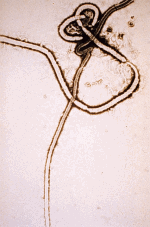
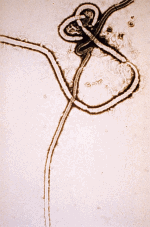
The Ebola Virus

Cocolitzli had been caused by a hemorrhagic fever virus that had lain dormant in its animal hosts. Severe drought would have contained the host population, forcing them to hole up wherever they could find water. Initially, only a small percentage may have been infected, but when forced into close quarters the virus was transmitted to others. When the rains returned, the hosts quickly bred and spread the virus as they came into contact with humans. Once infected, humans transmitted the virus to one another through contact with blood, sweat, and saliva.

Hemorrhagic viruses affect human populations that are already stressed, Acuña-Soto says. "The natives were poor and probably near starvation and living in unsanitary conditions where the rats would congregate. They also worked in the fields, where they'd be exposed to the rat droppings.

Elsa Malvido, a historian from Mexico's National Institute of Anthropology and History, dismisses the idea. She believes the later epidemics were bubonic plague spread by black rats from Europe. 'They were more extreme because they were attacking people with no immunity,' she said.

There has been a debate in Europe over the cause of the Black Death in 14th Century Europe. In 1894, two scientists, Alexandre Yersin and Shibasaburo Kitasato, independently identified the rod-shaped bacterium responsible for an epidemic of bubonic plague sweeping out of China.

Yersinia pestis

Yersin soon linked the Black Death to the bacterium, named Yersinia pestis. Since then historians and scientists have strengthened the argument that bubonic plague was responsible for Black Death and similar outbreaks in medieval Europe. But other experts have expressed doubts, largely on account of the difficulty of identifying a disease based on the few medieval descriptions of the Black Death that have survived.

Two researchers from the University of Liverpool presented a new theory in 2001 arguing that a hemorrhagic virus, like Ebola, probably caused the Black Death and most of the smaller epidemics that struck Europe for the next three centuries, not bubonic plague. They argued that Bubonic plague is a disease of rodents and Europe had no rodent species that could harbor the disease between outbreaks. In addition the rats that passed the plague through fleas to humans during epidemics all died so the plague would have perished with them.

Samuel K. Cohn, a professor of medieval history at the University of Glasgow, agrees that other diseases are better candidates for the Black Death than Yersinia pestis but feels that an Ebola-like virus would burn out too quickly to produce the widespread mortality seen.
Most epidemiologists, however, argue that the evidence points most strongly toward the bubonic plague pathogen as the cause of the Black Death. Bubonic plague can take three forms in people, and those forms can account for the descriptions of Black Death symptoms. In addition French researchers reported that they had found Yersinia pestis in the dental pulp of three people buried in Montpellier, France, in the 14th century. "Medieval Black Death was the plague," they declared.

Some scientists suggest that more concrete evidence - for example, finding Yersinia pestis in the remains of victims from northern Europe and England - is needed to settle the question of what caused the Black Death. Perhaps the overall position is best summed up by Dr Joshua Lederberg an emeritus professor of microbiology and a Nobel laureate in medicine at Rockefeller University: "Yersinia still seems to me the most reasonable assignment as the cause of the Black Death, but I say that with less than unshakable conviction."


Disease - Present

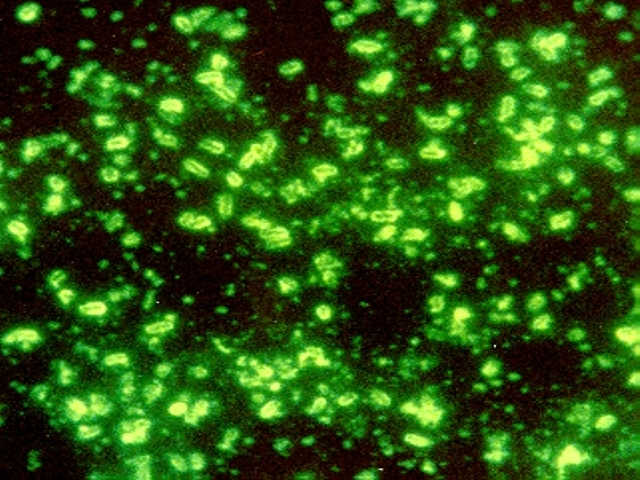
M. tuberculosis

Two short medical related article in Observer piqued my interest. The first concerns the discovery of a deadly new strain of Tuberculosis that is resistant to virtually every anti TB drug in medicine’s arsenal. Sadly, the emergence of a strain that is resistant to all available drugs is inevitable. TB already accounts for nearly 2 Million lives a year (WHO estimates are that it killed 1.7m people worldwide in 2004), a completely drug resistant version will increase this figure, in particular among the world’s poor and the vulnerable (we can see a horrific foretaste below).

Even if effective treatments are forthcoming they will not be on stream for some years. Would we be in this situation if our pharmaceutical firms were not so focused on developing another Viagra? Perhaps, but then Mycobacterium tuberculosis would find a way around these drugs sooner or later.


Fears of Extreme TB strain

Health experts are to hold an emergency meeting in Johannesburg this week, following the discovery earlier this year of a deadly new strain of tuberculosis (aka .extreme drug-resistant TB).

'This new strain leaves us facing a nightmare,' said Paul Nunn, coordinator of the WHO's drug-resistance unit. It is resistant to nearly every drug in our arsenal. We are now on the threshold of the appearance of a strain of TB that is resistant to every medicine known to science. Mainstream drugs are ineffective against multiple drug-resistant TB. However, there are half a dozen second-line medicines that can be used to tackle it. Now this new extreme resistant strain has appeared. It is not only resistant to our principal anti-TB drugs, but to many of our second-line defences. In short, we are now on the last line of our defences against tuberculosis.'

Among the areas found to have been affected by extreme drug-resistant TB are Latvia and South Africa. Scientists discovered the strain last month among HIV-infected patients in the Kwazulu-Natal region. 'Fifty two of the 53 infected people are already dead, and the last may well have died by now,' added Nunn. An estimated 4.5 million people in South Africa have HIV. Extreme drug-resistance TB could devastate the population. 'If countries don't have the diagnostic capacity to find these patients, they will die without proper treatment,' said Nunn.

As a result, WHO is to hold its emergency meeting in Johannesburg to help establish measures that will lead to the rapid diagnosis of the new strain. 'It appears to kill within a few weeks and that does not give us a lot of time to spot it and treat it with the right drugs,' added Nunn. The few classes of drugs that are still effective against this strain of TB are expensive and can be toxic.


02 September 2006

The Wicker Man - Crash and Burn?

Both the Not-wife and I love a good (or a not so good) horror, especially a cheesy Hammer film like Countess Dracula (Please don’t look at this film for a the true biography of Elizabeth Bathory!), Deathline (If you have ever been on the Underground you would believe in cannibals too!) or Witchfinder General (the jolly japes of Essex boy Matthew Hopkins).


Christopher Lee as Lord Summerisle

One film stands head and shoulders above these offerings. I mean of course the Wicker Man which features star turns by Edward Woodward and Christopher Lee, plenty of nudity and a stunning soundtrack (If you are a folk aficionado that is)

Britt Ekland as Willow

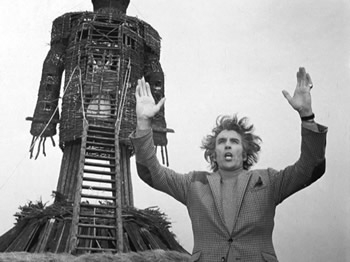
Ultra conservative and deeply religious Police sergeant Howie (Woodward), sets out to investigate the disappearance of a young girl, Rowan Morrison, on the remote Scottish island of Summerisle. During his investigations he discovers that entire population follows a pagan religion under the island's owner Lord Summerisle (Lee) Needless to say Howie is increasingly shocked by the islanders' behaviour (although he is simultaneously attracted and repulsed by the alluring Willow (Britt Ekland). As the film unfolds he uncovers evidence indicating that Rowan may soon be the victim of a human sacrifice. In the hope of saving her he disguises himself as Punch and infiltrates the Island’s May Day festival. Little does he realise the fate that awaits him!

Sergeant Howie about to meet his awful fate

The Wicker Man had a troubled history. The film was massively cut before receiving a release as the support feature to Don’t Look Now. Despite its uneven and rather incoherent cut the Wicker Man eventually became a cult hit. In the late 90s an extended version was released that gave the film greater coherence. Sadly, the original cut no longer exists. Despite this it is an excellent film.

Hollywood is often unfairly criticised for the quality of its output (it is often fairly criticised too!). One of the biggest bug bears in my view is its fetish for remakes. Generally it manages to make a sow’s ear out of a silk purse – Get Carter, the Italian Job, Sommersby/the Return of Martin Guerre, the Ring/Ringu all spring to mind. Some remakes aren’t too bad: the Vanishing is well executed remake of Spoorloos except for its happy ending (It probably helped that George Sluizer directed both versions).

Nicholas Cage

I suppose it was inevitable that Hollywood would eventually get around to a remake of the Wicker Man: Edward Woodward has been replaced by Nicholas Cage, the Western isles have been transplanted to Puget Sound and Lord Summerisle becomes Ellen Burstyn as Sister Summersisle. Directed by NeilLaBute, the remake has just opened in the US to a hail of bad reviews.Writing in the Toronto Star, Peter Howell dubbed the film "an unholy mess" full of moments of "unintended hilarity”. Screen International critic Allan Hunter dismissed it as "a clunky, conventional mystery yarn that will appall aficionados of the Robin Hardy classic". Danny Minton of the Beaumont Sun went further, predicting that The Wicker Man will go down as one of the worst movies of the year. "This is the kind of film for which Golden Raspberries were made," he wrote. A private reviewer in the Washington Post said “A Wicker Chair is more interesting”.

Sister Summersisle

It is not all bad news: the Orlando Sentinel claimed that the film has some good ideas but never develops them. "It doesn't quite work out because LaBute or his studio lost its nerve and couldn't decide whether to play the film ironic, horrific or just a goof," Warner Bros has a lot riding on the success of The Wicker Man. The studio has been stung in recent months by the failure of such high-profile releases as Poseidon and The Lady in the Water. Insiders predict that LaBute's film may go down as yet another disaster.

Given our bias we probably will not be venturing out to see this at the cinema. We probably will rent it when it is out on DVD. Will it will be “Battlefield Earth bad or “Plan 9 from Outer Space” bad? That is the dilemma!


Going for an English


From the often hilarious sketch show starring Meera Syal, Snjeev Bashkar, Nina Wadia and Kulvinder Gill. While it could be a bit hit and miss, when it was on form it was brilliant. This is probably the signature sketch (their Parrot sketch if you will). It goes to prove that turnaround is fair play!

01 September 2006

Hammasa Kohistani


To be honest I had totally forgotten about Hammasa until she appeared in today’s Independent. Whether you consider beauty pageants to be eye candy or exploitation, she does remind us that stereotypes are there to be exploded. A beauty Queen may not have the kudos of an organisation like RAWA (these women are an inspiration in my view) but if she can make the “man on the street” realise that not all muslims are the same then it will be worthwhile.

Last year Hammasa Kohistani blended in with the throng of ethnically diverse students at her West London college. But her existence as an ordinary teenager ended last September when she became the first Muslim Miss England in the history of the contest.

Then aged 18, Ms Kohistani, the daughter of Afghan refugees who fled the Taliban, had no idea just how much the beauty crown would change her life, not least because it came just two months after the Tube bomb atrocities of 7 July. The timing meant her role was politicised from the start, and she found herself unwittingly placed in an ambassadorial role for modern Islam. That was never more evident than yesterday, when Ms Kohistani criticised Tony Blair for stereotyping the Islamic community in the wake of the London bombings. Her strong views and willingness to voice them have highlighted the tensions inherent in being both a Western beauty queen and a Muslim. While liberal Muslims from across the world hailed her as their mascot, her modelling career was met by frostiness in orthodox Islamic quarters.

Speaking yesterday as she resumed her studies at Uxbridge College, Ms Kohistani recalled: "The day after I won the pageant, I got a phonecall at about six in the morning. It was from an Afghan man living in Pakistan and he congratulated me and said my role would bring Afghan women a bit more respect. I received a card that some women in Afghanistan had made me which had a large pair of eyes and my image in the middle of the iris, saying I was 'the eyes of Afghan women' which I found so touching. But it can be difficult as well. In interviews, people always ask me questions about being a Muslim and about politics. At first it was quite rewarding and I enjoyed it. But after the first 200 interviews, I realised that it was all about me being Muslim. I won a beauty contest, not a politics degree." However, she conceded that being asked for her serious opinions has led her to reflect on what she believes, to the extent that she is considering a political career after university.

Reflecting on the past year, she feels the Tube attacks unified communities in one sense, as the people who were killed came from many different backgrounds and included Muslims. But she also believes that some "insensitive" comments by the Prime Minister have fuelled hostility towards Islam. "There's hostility on both sides, towards the Muslim community and from the Muslim community, who are trying not to have self-fulfilling prophecies that meet their stereotype, while the English community feel threatened by them."

After a year of travelling the world as Miss England, she has met world leaders including Shaukat Aziz, Prime Minister of Pakistan, and exchanged views with a diverse range of Muslim women. "Shaukat Aziz told me it was women like me that would make the world aware that there are so many more kinds of Muslim women out there than the stereotype that the Western media has of them in a burqa," she said. "Whenever we see images of Afghan women, they are in a burqa but there are so many women who don't look like this. "My own grandmother never wore a burqa. When people see me, they can't believe I'm from Afghanistan because I'm not covered up.

She has also used her increased profile to campaign for the most deprived women in Afghanistan. Together with her mother, she is creating a charity, Roshani, which translates as Light in Farsi, to raise funds for educating women and children. "It will be used to provide educational facilities for the most under-privileged but also for mental health. So many women in Afghanistan are illiterate, I felt I needed to do something."


Bebe


Bebe is about 4 years old now. She was a feral cat who was rescued after she had her first litter. We took her in about 4 years ago and a few months of love and attention turned her from a terrified but wild cat into a loving and affectionate one. She is devoted to our Alpha cat Robyn.