From the BBC
Flights out of the UK are today have been massively disrupted following an apparent disruption of a plot to blow up planes in flight from the UK to the US. It is thought the plan was to detonate explosive devices smuggled in hand luggage on to as many as 10 aircraft operated by United, American and Continental airlines.
Police are searching premises after 21 people were arrested. Home Secretary John Reid said had the attack gone ahead it would have caused a loss of life of "unprecedented scale". He said they were "confident" the main players are in custody, but neither the police nor the government is "in any way complacent".
The plot was thought to have involved a series of "waves" of simultaneous attacks, targeting three planes each time. He also said the plan "revolved around liquids of some kind".
Metropolitan Police Deputy Commissioner Paul Stephenson said the alleged plotters had intended "mass murder on an unimaginable scale. We are confident that we have disrupted a plan by terrorists to cause untold death and destruction and to commit, quite frankly, mass murder," he said. "We believe that the terrorists' aim was to smuggle explosives on to aeroplanes in hand luggage and to detonate these in flight. We also believe that the intended targets were flights from the United Kingdom to the United States of America."
According to BBC sources the "principal characters" suspected of being involved in the plot were British-born. There are also understood to be links to Pakistan. Despite the arrests the threat level had been raised "in case there is some other sub-plot, back-up plot around this that the police aren't aware of".
The Department for Transport set out the details of the security measures at UK airports. Passengers are not allowed to take any hand luggage on to any flights in the UK, the department said. Only the barest essentials - including passports and wallets - will be allowed to be carried on board in transparent plastic bags.
Some may accuse the government of scare tactics or perpetrating a ruse to facilitate a raft of more draconian anti terror laws. Such people would call me naïve or brainwashed but in the same way that I do not believe the government had any hand in 7/7 I do not believe they would pull a stunt like this. That does not mean the authorities do not get things badly wrong – de Menezes and the recent Forest Gate raid spring to mind.
aircraft
bombings
10 August 2006


08 August 2006
In Praise of Essex Part 4 (well sort of) – Essex Man
Like Essex girl, Essex man is another well worn stereotype , Basically he is portrayed as a xenophobic Sun reader who drives a Dagenham dustbin (Ford to you), and is set on material gain (and minimal taxes): In the eighties Essex Man was at the (white)vanguard of Thatcherism.
 Loadsamoney
Being an Essex man myself (well Romford was still part of Essex when I was born), I consider it to be an unfair portrayal. Unfortunately there have been “Essex men” for centuries.
Dick Turpin
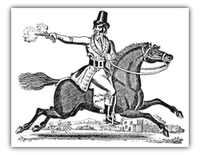 Dick Turpin (as found on the Highways Agency website of all places!)
Change the Ford to a horse and the material gain to thuggery and highway robbery and you have Dick Turpin. Turpin was born in 1706 in rural Essex, the son of John Turpin, a small farmer and some-time innkeeper. Young Dick probably served an apprenticeship with a butcher in Whitechapel (later the hunting ground of Jack the Ripper). When his apprenticeship was over, he opened a butcher shop, and began to steal sheep, lamb and cattle. Caught in the act of stealing two oxen, he fled to Essex to save himself. He then tried his hand at smuggling, but proved as inept at this as he had at cattle rustling.
At this point Turpin was part of what was known as the Essex or Gregory Gang. The gang started raiding isolated farmhouses, terrorizing and torturing the occupants into giving up their valuables. Robbing remote farmhouses became the Gang's speciality, and it was only towards the end of his criminal career that Turpin was actually involved in highway robbery.
After the capture members of the gang Turpin returned to East Anglia where he began working with 'Captain' Tom King, one of the best-known highwaymen of the day.. One night, while on the road to London, he took a fancy to a particularly fine horse ridden by a man called Major. Mr. Major didn't take the loss lying down and the horse was finally traced to the Red Lion pub in Whitechapel. When Tom King came to collect the horse, he was arrested. Turpin, who had been waiting nearby, rode toward the constables holding King and fired at them. Unfortunately, he was a dreadful shot, and the bullets hit King rather than his captors.
Realising that he would not escape capture if he remained in the London area, Turpin set off for Yorkshire., where he settled under the name of John Palmer, financing his fancy lifestyle with frequent excursions into Lincolnshire for more horse and cattle rustling and the occasional highway robbery. One day, returning from an unsuccessful hunt he shot his landlord's rooster. When the landlord complained he threatened to kill the landlord and he was taken into custody. Things might not have gone badly for Turpin had he not written a letter to his brother, requesting him to 'procure an evidence from London that could give me a character’
Unfortunately for Turpin, his brother was too mean to pay the postage and returned the letter to the Post Office. By a great coincidence Turpin's former schoolmaster saw the letter recognised the handwriting. He took the letter to the local magistrate and, with his permission, opened it. Despite the fact that it was signed John Palmer the author was identified as Turpin. Convicted on two indictments, Turpin was sentenced to death and hanged in York in April 1739.
The legend of Dick Turpin as a dashing highwayman was sealed with the novel Rookwood (1834) by Harrison Ainsworth in which the highwayman 'Dauntless Dick Turpin' with his horse Black Bess is a secondary character. Ainsworth's description of an epic ride from Westminster to York caught the popular imagination and turned a fairly average pot-boiler into a runaway best-seller. History, romance, and legend rapidly blurred and, eventually, the fictional ride of Ainsworth's Turpin totally eclipsed the villain's real exploits. The metamorphosis of Dick Turpin, house-breaker, torturer, murderer, horse-stealer and all-round real nasty piece of work into Dick Turpin, Highwayman and Knight of the Road was complete.
For what it’s worth the great ride to York was actually made by a 17th-century highwayman John Nevison, who early one morning in 1676 robbed a homeward-bound sailor on the road outside Gads Hill, Kent. Deciding he needed to establish an alibi, Nevison set off on a ride that took him more than 190 miles in about 15 hours.
Source: Stand and Deliver
Dick
Turpin
Essex
Man
Highwayman
 Loadsamoney
Dick Turpin
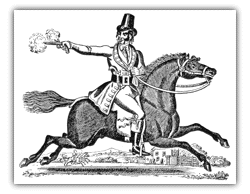 Dick Turpin (as found on the Highways Agency website of all places!)
Change the Ford to a horse and the material gain to thuggery and highway robbery and you have Dick Turpin. Turpin was born in 1706 in rural Essex, the son of John Turpin, a small farmer and some-time innkeeper. Young Dick probably served an apprenticeship with a butcher in Whitechapel (later the hunting ground of Jack the Ripper). When his apprenticeship was over, he opened a butcher shop, and began to steal sheep, lamb and cattle. Caught in the act of stealing two oxen, he fled to Essex to save himself. He then tried his hand at smuggling, but proved as inept at this as he had at cattle rustling.
At this point Turpin was part of what was known as the Essex or Gregory Gang. The gang started raiding isolated farmhouses, terrorizing and torturing the occupants into giving up their valuables. Robbing remote farmhouses became the Gang's speciality, and it was only towards the end of his criminal career that Turpin was actually involved in highway robbery.
After the capture members of the gang Turpin returned to East Anglia where he began working with 'Captain' Tom King, one of the best-known highwaymen of the day.. One night, while on the road to London, he took a fancy to a particularly fine horse ridden by a man called Major. Mr. Major didn't take the loss lying down and the horse was finally traced to the Red Lion pub in Whitechapel. When Tom King came to collect the horse, he was arrested. Turpin, who had been waiting nearby, rode toward the constables holding King and fired at them. Unfortunately, he was a dreadful shot, and the bullets hit King rather than his captors.
Realising that he would not escape capture if he remained in the London area, Turpin set off for Yorkshire., where he settled under the name of John Palmer, financing his fancy lifestyle with frequent excursions into Lincolnshire for more horse and cattle rustling and the occasional highway robbery. One day, returning from an unsuccessful hunt he shot his landlord's rooster. When the landlord complained he threatened to kill the landlord and he was taken into custody. Things might not have gone badly for Turpin had he not written a letter to his brother, requesting him to 'procure an evidence from London that could give me a character’
Unfortunately for Turpin, his brother was too mean to pay the postage and returned the letter to the Post Office. By a great coincidence Turpin's former schoolmaster saw the letter recognised the handwriting. He took the letter to the local magistrate and, with his permission, opened it. Despite the fact that it was signed John Palmer the author was identified as Turpin. Convicted on two indictments, Turpin was sentenced to death and hanged in York in April 1739.
The legend of Dick Turpin as a dashing highwayman was sealed with the novel Rookwood (1834) by Harrison Ainsworth in which the highwayman 'Dauntless Dick Turpin' with his horse Black Bess is a secondary character. Ainsworth's description of an epic ride from Westminster to York caught the popular imagination and turned a fairly average pot-boiler into a runaway best-seller. History, romance, and legend rapidly blurred and, eventually, the fictional ride of Ainsworth's Turpin totally eclipsed the villain's real exploits. The metamorphosis of Dick Turpin, house-breaker, torturer, murderer, horse-stealer and all-round real nasty piece of work into Dick Turpin, Highwayman and Knight of the Road was complete.
For what it’s worth the great ride to York was actually made by a 17th-century highwayman John Nevison, who early one morning in 1676 robbed a homeward-bound sailor on the road outside Gads Hill, Kent. Deciding he needed to establish an alibi, Nevison set off on a ride that took him more than 190 miles in about 15 hours.
Source: Stand and Deliver
Dick
Turpin
Essex
Man
Highwayman
Umm... Errr....Welcome Home Dame Shirley

Today’s Independent reports that Dame Shirley Porter has returned to London after 12 years of self-imposed exile in Israel, Porter has bought a £1.5m flat in Mayfair close to the sumptuous Bayswater flat from which she masterminded a major gerrymandering operation during the 1980s.
The “homes for votes” affair was arguably the most scandalous case of political corruption in recent British history. It saw her convicted of selling council homes in marginal wards to prospective Tory voters. She was also found to have forced 122 homeless families likely to vote Labour out of eight marginal seats, forcing them instead to live in tower blocks that the council knew to be contaminated with asbestos.
At the time, Labour was threatening to take control of Westminster, which was seen as one of Tory flagship councils, following a near-victory in the 1986 elections. Following a district auditor's investigation in 1994, Dame Shirley was found guilty of wilful misconduct and gerrymandering, and ordered to pay surcharges of £31.6m to Westminster Council. This later rose to £42m with interest and legal fees.
She fled to Israel, which has no extradition treaty with the UK, and consistently refused to pay. Two years ago, Westminster, which is still run by the Conservatives, accepted £12.3m in settlement of her outstanding debt, and the case is now considered closed.
There is nothing to stop her returning to the UK but somehow I cannot imagine she will be anything but an unwelcome reminder of past Tory scandal. I doubt Cameron will be rushing to put her on his A list any time soon.
Shirley
Porter
Tory
Westminster
sleaze
Genocidaires Still in Suburbia
Genocidaires in Suburbia also refers. According to today’s Guardian, Amnesty International is urging the attorney general to prosecute two Rwandan genocide suspects living in Britain. Secretary general, Irene Khan, has written to the attorney general, Lord Goldsmith, expressing "grave concern" that the government has failed to take any action against two men who are among the top 100 Rwandan genocide suspects at large and living in Europe.
Charles Munyaneza, 48, was granted asylum in Britain in 2000 and lives with his family in a semi detached house in Putnoe, Bedford. Celestin Ugirashebuja, 55, lives in Walton on the Naze, Essex. Both were mayors of towns in southern Rwanda during the 1994 genocide, and are accused by the Rwandan prosecutor general of organising and directing the killings in their provinces. They both deny the charges.
Had they been investigated when they first arrived in the UK in 2000, the men could have been sent for trial to the International Criminal Tribunal for Rwanda (ICTR) in Tanzania. However, the tribunal has now been instructed by the UN security council to complete all trials by 2008.
Ms Khan said the British government should put appropriate legislation in place so as to be able to prosecute in this country in line with the UK's international obligations There are precedents for the UK to prosecute such suspects: last year an Afghan warlord, Faryadi Sarwar Zardad, 42, was convicted at the Old Bailey of taking hostages and robbing, beating, and shooting civilians at a checkpoint in Afghanistan 10 years ago.
Rwanda
Genocide
genocidaires
Munyaneza
Ugirashebuja
Charles Munyaneza, 48, was granted asylum in Britain in 2000 and lives with his family in a semi detached house in Putnoe, Bedford. Celestin Ugirashebuja, 55, lives in Walton on the Naze, Essex. Both were mayors of towns in southern Rwanda during the 1994 genocide, and are accused by the Rwandan prosecutor general of organising and directing the killings in their provinces. They both deny the charges.
Had they been investigated when they first arrived in the UK in 2000, the men could have been sent for trial to the International Criminal Tribunal for Rwanda (ICTR) in Tanzania. However, the tribunal has now been instructed by the UN security council to complete all trials by 2008.
Ms Khan said the British government should put appropriate legislation in place so as to be able to prosecute in this country in line with the UK's international obligations There are precedents for the UK to prosecute such suspects: last year an Afghan warlord, Faryadi Sarwar Zardad, 42, was convicted at the Old Bailey of taking hostages and robbing, beating, and shooting civilians at a checkpoint in Afghanistan 10 years ago.
Rwanda
Genocide
genocidaires
Munyaneza
Ugirashebuja
07 August 2006
Music Update

Although originally scheduled for release on 10 July, the new Hawkwind mini album Take Me to Your Future will now come out on 28 August. It will be a dual disc (CD one side, DVD on the other). The CD side will consist of five songs: the Reality of Poverty, Ode to a Time Flower, Small Boy plus re-workings of Uncle Sam’s on Mars and Silver Machine. The DVD side will contain a selection of concert performances. Full details have not been issued but it will include Utopia and Assassins of Allah.
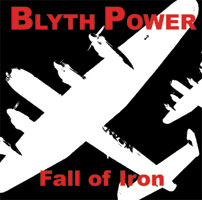
Last Friday saw the release of Fall of Iron by folk-punk band Blyth Power. Blyth Power are very much an acquired taste, in no small part due to the distinctive voice of singer/drummer Joseph Porter. Sadly the not-wife has never acquired the taste so I am forced to listen to them when she is not around; unless I want the CD inserted into a non playing slot!

Finally Robyn Hitchcock will be releasing his new album Ole Tarantula in October. Recorded with Peter Buck (of REM), Scott McGaughey and Bill Rieflin as the Venus Three it includes Adventure Rocket Ship, Ole! Tarantula and (A Man's Gotta Know His Limitations) Briggs which I have heard him play live and are excellent. Other tracks include NY Doll, the Museum of Sex and Underground Sun which was written for a friend of Hitchcock's who died last year. Hopefully he will be touring the album later in the year.
Hawkwind
Blyth
Power
Robyn
Hitchcock
Secret locations we knew about anyway
Today’s Guardian reports that the The Ordnance Survey has finally stopped falsifying Britain's maps, almost 80 years after the government first ordered cartographers to delete sensitive sites in the hope of thwarting German bombers.
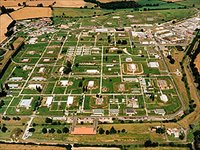
The Landranger map series will, for example, now show the nuclear warhead plant at Burghfield, near Reading, previously shown as a mysteriously empty field while the access road appears for the so-called Corsham Computer Centre in Wiltshire, thought by conspiracy buffs to be Tony Blair's nuclear shelter.
Censorship started in 1927 when Prime Minister Stanley Baldwin secretly instructed: "No work of defence shall appear upon any map on sale to the general public” During the cold war, the Ministry of Defence listed 4,800 "key points" to be deleted. Censorship was later slashed to a more manageable list of super-secret targets, such as the Windscale nuclear plant, and GCHQ, the radio espionage agency.
But technology was moving too fast. Firms such as Multimap systematically made aerial surveys available from 1999, and now satellite pictures are available on the web and via software like Google Earth.
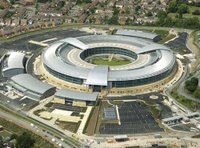
Intelligence writer Duncan Campbell said the tampering was a "futile farce that creaked on 40 years after it had ceased to have any conceivable value. It didn't even stop Hungarian diplomats taking picnics outside Burghfield in the 1960s."
secret
bases
Ordnance
Survey
The Landranger map series will, for example, now show the nuclear warhead plant at Burghfield, near Reading, previously shown as a mysteriously empty field while the access road appears for the so-called Corsham Computer Centre in Wiltshire, thought by conspiracy buffs to be Tony Blair's nuclear shelter.
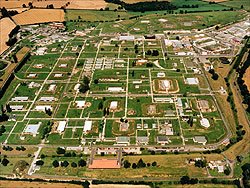
AWE Burghfield ( from its own official site)
Censorship started in 1927 when Prime Minister Stanley Baldwin secretly instructed: "No work of defence shall appear upon any map on sale to the general public” During the cold war, the Ministry of Defence listed 4,800 "key points" to be deleted. Censorship was later slashed to a more manageable list of super-secret targets, such as the Windscale nuclear plant, and GCHQ, the radio espionage agency.
But technology was moving too fast. Firms such as Multimap systematically made aerial surveys available from 1999, and now satellite pictures are available on the web and via software like Google Earth.
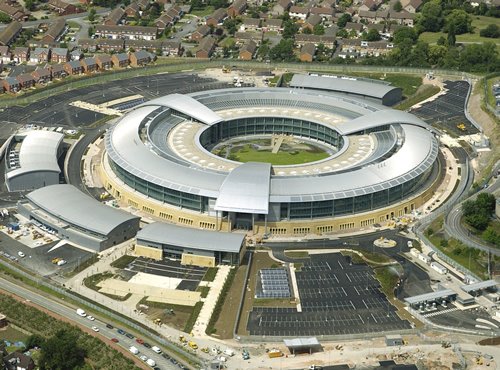
GCHQ (from a government better public buildings website)
Intelligence writer Duncan Campbell said the tampering was a "futile farce that creaked on 40 years after it had ceased to have any conceivable value. It didn't even stop Hungarian diplomats taking picnics outside Burghfield in the 1960s."
secret
bases
Ordnance
Survey
06 August 2006
Yet Another Crab Spider Photo!

Shame the fangs are a little blurred but I do like this shot of the spider
From Nagyrev to the Yorkshire Dales
Helen Mirren is set to star in a new film called Angel Makers, a tale based on the murders that took place in the Hungarian village of Nagyrev from the end of the First World War until 1929.
The film was inspired by a documentary by the Dutch film-maker Astrid Bussink who spent four months in the village investigating claims that, after the First World War, an epidemic of poisoning claimed the lives of men who had recently returned to their wives from the trenches. The spouses were the suspected culprits.
'Angel maker' was the name given to the village midwife, Zsuzsanna Fazekas, who supplied the women with arsenic. This was originally a euphemism for her part-time trade of administering abortions but when village women complained about their drunken or violent husbands, Fazekas told them: 'If there's a problem with him, I have a simple solution.'.
Injured soldiers came home to a severe economic depression. It was a hard life. The circumstances were extreme, and feeding another mouth that couldn't contribute anything was too much of a burden on the family.
Over the years, with the village cemetery filling up, police suspicions grew. They started to exhume bodies. Out of 50 bodies examined, 46 contained arsenic. Fingers pointed towards the midwife. Mrs Fazekas cheated retribution by taking some of her own poison but 26 women form the village stood trial. Eight received the death sentence, the rest went to prison, seven of them for life.
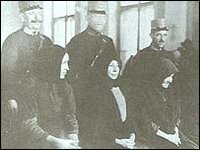 Nagyrev women facing trial
The updated, fictionalised version of the story will see the women of a Yorkshire farming community take the place of the Hungarian villagers. They turn murderous when their British husbands return from the trenches to discover their places have been taken by German prisoners of war.
Note I have been advised by a good Hungarian friend that the expression Angel Makers is not appropriate as a description for the murders. It is an expression used in Hungary to describe aborted foetuses.
Story
BBC report on Nagyrev
murder
arsenic
Nagyrev
Mirren
The film was inspired by a documentary by the Dutch film-maker Astrid Bussink who spent four months in the village investigating claims that, after the First World War, an epidemic of poisoning claimed the lives of men who had recently returned to their wives from the trenches. The spouses were the suspected culprits.
'Angel maker' was the name given to the village midwife, Zsuzsanna Fazekas, who supplied the women with arsenic. This was originally a euphemism for her part-time trade of administering abortions but when village women complained about their drunken or violent husbands, Fazekas told them: 'If there's a problem with him, I have a simple solution.'.
Injured soldiers came home to a severe economic depression. It was a hard life. The circumstances were extreme, and feeding another mouth that couldn't contribute anything was too much of a burden on the family.
Over the years, with the village cemetery filling up, police suspicions grew. They started to exhume bodies. Out of 50 bodies examined, 46 contained arsenic. Fingers pointed towards the midwife. Mrs Fazekas cheated retribution by taking some of her own poison but 26 women form the village stood trial. Eight received the death sentence, the rest went to prison, seven of them for life.
 Nagyrev women facing trial
The updated, fictionalised version of the story will see the women of a Yorkshire farming community take the place of the Hungarian villagers. They turn murderous when their British husbands return from the trenches to discover their places have been taken by German prisoners of war.
Note I have been advised by a good Hungarian friend that the expression Angel Makers is not appropriate as a description for the murders. It is an expression used in Hungary to describe aborted foetuses.
Story
BBC report on Nagyrev
murder
arsenic
Nagyrev
Mirren
05 August 2006
European Spider of the Year 2006

The not-wife called me out into the garden at lunchtime to show me another crab spider. The other ones we have seen in the garden were white but this one was yellow with red stripes on its abdomen.
According to the European Society of Arachnology , what we had seen was a female flower crab spider, Misumena vatia, exactly the same specie as the white ones we had seen and photographed earlier. Amazingly it has the ability to change its colour from white to yellow.
Like all crab spiders, Misumena has crab-like legs rotated onto their sides, which give the family its name. The flower crab spider is, a sit-and-wait predator. It mostly lurks among flower petals waiting for insects to fly by. The front legs, which are held outwards, will grab an unsuspecting visitor with amazing speed, while at the same time a poisonous bite is administered. Prey is mostly eaten on the flower and is sucked dry through tiny holes, such that an almost complete exoskeleton is left over.

Typical habitats are open spaces like meadows, moors and fields, but also sunny paths and forest margins, wasteland and gardens. In the UK the species seems to be occurring exclusively in the southern parts. In Europe Misumena occurs from Scandinavia to the Mediterranean.
The European Society of Arachnology has designated the flower crab spider as its spider of the year for 2006.
flower
crab
spider
garden
Tag, you’re it
I have been tagged
1: One book that changed your life:
No book has actually changed my life as such. Some have definitely influenced me. I
will choose 1984 by George Orwell, not because it changed my worldview but because it represented a major change in my reading tastes.
2: One book you have read more than once:
Quite a few have been given a second or third re-reading but I will choose The Poor Mouth by Flann O’Brien (well my blog takes its name from this book; I had better give it a plug!)
3: One book you would want on a desert island:
How to Build a Teleportation Device with Two Coconuts and a Hermit Crab by Alexander Selkirk
4: One book that made you laugh:
The War of Don Emmanuel’s Nether Part by Louis de Bernieres. A mix of the very dark and the riotously funny
5: One book you wish had been written:
Anything by John Kennedy Toole written after a Confederacy of Dunces. His suicide meant that this was his last.
6: One book you wish had never had been written:
The Soft Machine by William Burroughs. Utter shit
7: One book that made you cry:
No book has made me cry but there are a few where I wanted a happy ending. Emile Zola’s Germinal is an example
8: One book you are currently reading:
Talk Talk by TC Boyle
9: One book you have been meaning to read:
Not one book but a book cycle: In search of Lost Time by Marcel Proust.
10: Now tag five people
Redwine
Obokun
Dave
Gert
Elasticwaistbandlady
1: One book that changed your life:
No book has actually changed my life as such. Some have definitely influenced me. I
will choose 1984 by George Orwell, not because it changed my worldview but because it represented a major change in my reading tastes.
2: One book you have read more than once:
Quite a few have been given a second or third re-reading but I will choose The Poor Mouth by Flann O’Brien (well my blog takes its name from this book; I had better give it a plug!)
3: One book you would want on a desert island:
How to Build a Teleportation Device with Two Coconuts and a Hermit Crab by Alexander Selkirk
4: One book that made you laugh:
The War of Don Emmanuel’s Nether Part by Louis de Bernieres. A mix of the very dark and the riotously funny
5: One book you wish had been written:
Anything by John Kennedy Toole written after a Confederacy of Dunces. His suicide meant that this was his last.
6: One book you wish had never had been written:
The Soft Machine by William Burroughs. Utter shit
7: One book that made you cry:
No book has made me cry but there are a few where I wanted a happy ending. Emile Zola’s Germinal is an example
8: One book you are currently reading:
Talk Talk by TC Boyle
9: One book you have been meaning to read:
Not one book but a book cycle: In search of Lost Time by Marcel Proust.
10: Now tag five people
Redwine
Obokun
Dave
Gert
Elasticwaistbandlady
Subscribe to:
Posts (Atom)