My knee still hurts like hell over a week on. I was planning a cerebral post today (or at least the next installment of the Red Cushing saga at long last!) but I spent the afternoon in bed instead.
Instead of Red Cushing I thought both of my readers would benefit from a few videos fron 1980/91 that showcase the barrel scrapings of disco-pop (until Stock, Aitken and Waterman started their own brand of turd polishing in the late 80s that is)
Aneka - Japanese Boy
Kelly Marie - It Feels Like I'm In Love (with a little bit of Ottawan's D.I.S.C.O. thrown in for added agony)
Liquid Gold - Dance Yourself Dizzy
Aneka, reverted to being Mary Sandeman and is a folk singer. as she was before her brief pop caereer. Firghteningly Japanese Boy reached number 1 in the UK. Nobody got poor underestimating public taste I suppose (to paraphrase HL Mencken)
07 March 2009


Photo Hunt - Space
 The theme for this week's Photo Hunt is Space. Since I live in a house that is cramped thanks to our being pack-rats and I don't have any decent shots of teh night sky, here's the Chase in Dagenham. It is a very pleasant, natural space near where I live.
For information: a Chase is an old English word for a private, unenclosed game preserve. At some stage it must have been a hunting gfround for the owners of the nearby Bretons Manor.
06 March 2009
Music for the cloth-eared generation and why a musical ear means luck in love.
Technological changes affect musical tastes according to the Telegraph: the piano allowed composers greater freedom to change volume within a piece of work, while the four-minute limit of the early phonograph player setting the standard for the length of the modern pop song. Those of us raised in the vinyl era prefer the sound you get from an LP or a single to later musical formats.
Now it seems that the flatter, tinny, sound associated with digital music is being chosen by some record producers as young listeners no longer appreciate high fidelity recordings.
Jonathan Berger, Professor of Music at Stanford University, California, has conducted an eight-year study in which students have rated various formats playing the same song. He found that, over time, there was a rise in preference for MP3 players and that there was no perception of inferior quality. Professor Berger said that the phenomenon was similar to the continued preference of some for music from vinyl records heard through a gramophone. "Some people prefer that needle noise – the noise of little dust particles that create noise in the grooves. I think there's a sense of warmth and comfort in that.
Rennie Pilgrem, a dance music producer, said he mixed his tracks while listening to them through iPod headphones to cater to the less refined tastes of today's youth. "To my ears iPods are not even as good quality as cassette tape," he said. "But once someone gets used to that sound then they feel comfortable with it."
Stephen Street, who has produced records for Blur, the Cranberries and Kaiser Chiefs, said the change had led to pressure to add volume at the expense of quality. "What you are hearing is that everything is being squared off and is losing that level of depth and clarity," he said. "I'd hate to think that anything I'd slaved over in the studio is only going to be listened to on a bloody iPod."
Personally I find the iPod to be very convenient way to listen to my music collection. I have getting on for 2,000 albums so a nice, big iPod means I can have a all the songs I still listen to in one place. The quality isn’t that great but a decent set of headphones (I prefer Ultimate Ears Super Fi5 pro phones)) does sound quality. The headphones that come with MP3 players are, quite frankly, crap. Still there’s nothing like dusting off an LP and putting it on the turntable.
Meanwhile, having a trained ear can be an advantage in a romantic relationship. According to a study by North Western University researchers (Again reported in the Telegraph).
Anyone searching for a lover with that elusive quality of being a "good listener" should pick someone who has gone through musical tuition, said the results of the study. Apparently the the ability that allows them to pick out a tune also means they can pick out 'emotion' in the human voice better than most. Lead researcher Dana Strait said: "Quickly and accurately identifying emotion in sound is a skill that translates across all areas, whether in the classroom, boardroom or bedroom."
For the test, the 30 volunteers were strapped to electrodes to measure the reaction of their brainstems. Wearing headphones they were asked to watch a nature film in a foreign language with subtitles in order to keep various senses occupied. Then a tiny blast of a baby's cry, lasting for a fraction of a second, was played through the headphones while their brainstem reaction was monitored. It found the brains of those with musical training locked on to the complex parts of the sound which contain the emotion.
Well there you have it. I wish I wasn't tone deaf (sighs)
Now it seems that the flatter, tinny, sound associated with digital music is being chosen by some record producers as young listeners no longer appreciate high fidelity recordings.
Jonathan Berger, Professor of Music at Stanford University, California, has conducted an eight-year study in which students have rated various formats playing the same song. He found that, over time, there was a rise in preference for MP3 players and that there was no perception of inferior quality. Professor Berger said that the phenomenon was similar to the continued preference of some for music from vinyl records heard through a gramophone. "Some people prefer that needle noise – the noise of little dust particles that create noise in the grooves. I think there's a sense of warmth and comfort in that.
Rennie Pilgrem, a dance music producer, said he mixed his tracks while listening to them through iPod headphones to cater to the less refined tastes of today's youth. "To my ears iPods are not even as good quality as cassette tape," he said. "But once someone gets used to that sound then they feel comfortable with it."
Stephen Street, who has produced records for Blur, the Cranberries and Kaiser Chiefs, said the change had led to pressure to add volume at the expense of quality. "What you are hearing is that everything is being squared off and is losing that level of depth and clarity," he said. "I'd hate to think that anything I'd slaved over in the studio is only going to be listened to on a bloody iPod."
Personally I find the iPod to be very convenient way to listen to my music collection. I have getting on for 2,000 albums so a nice, big iPod means I can have a all the songs I still listen to in one place. The quality isn’t that great but a decent set of headphones (I prefer Ultimate Ears Super Fi5 pro phones)) does sound quality. The headphones that come with MP3 players are, quite frankly, crap. Still there’s nothing like dusting off an LP and putting it on the turntable.
Meanwhile, having a trained ear can be an advantage in a romantic relationship. According to a study by North Western University researchers (Again reported in the Telegraph).
Anyone searching for a lover with that elusive quality of being a "good listener" should pick someone who has gone through musical tuition, said the results of the study. Apparently the the ability that allows them to pick out a tune also means they can pick out 'emotion' in the human voice better than most. Lead researcher Dana Strait said: "Quickly and accurately identifying emotion in sound is a skill that translates across all areas, whether in the classroom, boardroom or bedroom."
For the test, the 30 volunteers were strapped to electrodes to measure the reaction of their brainstems. Wearing headphones they were asked to watch a nature film in a foreign language with subtitles in order to keep various senses occupied. Then a tiny blast of a baby's cry, lasting for a fraction of a second, was played through the headphones while their brainstem reaction was monitored. It found the brains of those with musical training locked on to the complex parts of the sound which contain the emotion.
Well there you have it. I wish I wasn't tone deaf (sighs)

05 March 2009
Cricket - It’s as English as Mussels and Chips!
I will happily admit that when it comes to cricket I don’t just fail “dear” Norman Tebbit’s cricket test, I don’t even get close to the exam room. Cricket bores me stiff. What other sport can have five day matches and still produce a draw!
I was therefore amused to see a BBC article about academic research claims cricket is not English, but was imported by immigrants from northern Belgium. A poem thought to have been written in 1533 suggests that the game originates from Flanders.

A cricket
The first definitive references to the game appeared in England in the 1600s, when fines were handed out for those missing church to play. The first cricket club was formed in Hambledon in the 1760s and the world-famous Marylebone Cricket Club (MCC) was founded in 1787.
But German academic Heiner Gillmeister and his Australian colleague, Paul Campbell of the Australian National University. say the discovery proves that cricket is anything but English. The poem, The Image of Ipocrisie, attributed to the English poet John Skelton, refers to Flemish weavers who settled in southern and eastern England.
They are described as "kings of crekettes"; "wickettes" are mentioned too. It is thought the weavers brought the game to England and played it close to where they looked after their sheep, using shepherd's crooks as bats.

Women cricketers in Iran
Mr Campbell's research was based on earlier investigations by Mr Gillmeister, a linguist from the University of Bonn. "There is no way to relate the term to any existing English word," he told the BBC. "I was brought up with Flemish children and I know the language well. I immediately thought of the Flemish phrase 'met de krik ketsen' which means to 'chase a ball with a curved stick'."
In response, cricket historian David Frith said: "It is hard to deny that this is a breakthrough. This discovery points to an addition to the great history of cricket. It's exciting we haven't yet written the final word on it." He added: "It does make you wonder why Belgium isn't playing test cricket though, doesn't it?"
Well Mr Firth perhaps the reason is because they have better things to do in life (like putting mayo on chips and brewing superb beer) than bother with cricket! Actually there is a Belgian Cricket Federation. Click here for all you need to know about the game in Belgium.
Seriously I don’t really get that worked up about cricket. If people enjoy it then who am I to stop them. It is interesting to see that cricket has reached Iran. In January the Iranian national side beat China by 307 runs. Meanwhile the first women’s tournament took place last October. Click here for more information about the game in Iran
I was therefore amused to see a BBC article about academic research claims cricket is not English, but was imported by immigrants from northern Belgium. A poem thought to have been written in 1533 suggests that the game originates from Flanders.

A cricket
The first definitive references to the game appeared in England in the 1600s, when fines were handed out for those missing church to play. The first cricket club was formed in Hambledon in the 1760s and the world-famous Marylebone Cricket Club (MCC) was founded in 1787.
But German academic Heiner Gillmeister and his Australian colleague, Paul Campbell of the Australian National University. say the discovery proves that cricket is anything but English. The poem, The Image of Ipocrisie, attributed to the English poet John Skelton, refers to Flemish weavers who settled in southern and eastern England.
They are described as "kings of crekettes"; "wickettes" are mentioned too. It is thought the weavers brought the game to England and played it close to where they looked after their sheep, using shepherd's crooks as bats.

Women cricketers in Iran
Mr Campbell's research was based on earlier investigations by Mr Gillmeister, a linguist from the University of Bonn. "There is no way to relate the term to any existing English word," he told the BBC. "I was brought up with Flemish children and I know the language well. I immediately thought of the Flemish phrase 'met de krik ketsen' which means to 'chase a ball with a curved stick'."
In response, cricket historian David Frith said: "It is hard to deny that this is a breakthrough. This discovery points to an addition to the great history of cricket. It's exciting we haven't yet written the final word on it." He added: "It does make you wonder why Belgium isn't playing test cricket though, doesn't it?"
Well Mr Firth perhaps the reason is because they have better things to do in life (like putting mayo on chips and brewing superb beer) than bother with cricket! Actually there is a Belgian Cricket Federation. Click here for all you need to know about the game in Belgium.
Seriously I don’t really get that worked up about cricket. If people enjoy it then who am I to stop them. It is interesting to see that cricket has reached Iran. In January the Iranian national side beat China by 307 runs. Meanwhile the first women’s tournament took place last October. Click here for more information about the game in Iran
Americans in the SS
This am amended repost of something I wrote in June 2006 when the Poor Mouth was but a babe in arms and my posts were a lot more serious.
Compared with what is available on the British Free Corps (BFC) there is a dearth of information on the Americans who fought for Germany in WWII. Frustrating as this is, what little there is out there is still quite interesting
There is no reliable estimate of the number of Americans who fought for the Reich. Marcus Wendel’s Axis History Factbook notes that in 1940 there were five US citizens in the Waffen SS in May 1940 and at least eight Americans died in its service during the war. Only two Americans are named Martin Monti and Peter Delaney. Both served in the journalism unitSS Standarte Kurt Eggers and Delaney appears to have been killed in 1945.
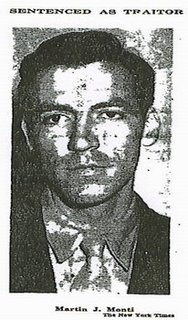
There is more information about Martin Monti . A lieutenant in the USAAF, Monti was also a hard line catholic who viewed the Reich as the bastion against communism. In 1944 he deserted his unit in India and made his way to Italy where he was able to take an F5 (a reconnaissance version of the P38 Lightning fighter) and fly it to Milan which was still in Axis hands. He ultimately gained the rank of 2nd Lieutenant in the Kurt Eggers unit and broadcast on Italian fascist radio.
After the war Monti was initially tried only for theft of the aircraft and after a sentence of hard labour he was able to rejoin the newly formed USAF, finally leaving 1948. It was only after this that he was arrested and convicted for treason. Sentenced to 25 years in prison he was paroled in 1960.
A post on a militaria forum lists 7 American citizens who gained officer rank in the SS
Hstuf (Captain). Josef Awender, a medical doctor in the “Frundsberg” born in Philadelphia in 1913,
Ustuf (2nd Lieutenant). Robert Beimes, a signal officer in the “Hitler Jugend” born in San Francisco in 1919, whose father was a translator in the SD,
Ustuf. Dr. Hans Eckert, born in Buffalo, NY in 1917 and assigned to the SS hospital at Dachau in November 1944,
Ostubaf (Lt Colonel) . Viktor Fehsenfeld, born in Elk Rapids, Michigan in 1894 and an administrative officer in the SS-WVHA,
Hstuf. Franz Stark, born in St. Louis in 1901 and assigned to the SD,
Hstuf. Eldon Walli, born in New York City in 1913 in the SS-Kriegsberichter
Abteilung (war reporters)
Hstuf. Paul Winckler-Theede, born in New York City in 1912 and who was a military judge in the “Das Reich” division.
It is claimed that their records are available in the Berlin Document Centre. Whether this is true or not I have no idea. There is no indication whether these had renounced their citizenship before joining the SS or if they were tried after the war. Perhaps these men were born in the US but returned the Germany when young.
There are rumours of an American SS unit called either the American Free Corps or the George Washington Brigade. The origins of this rumour surely comes from Kurt Vonnegut - In Slaughterhouse Five the American traitor Howard Campbell tries to recruit for the George Washington Brigade (See also Mother Night - Cambpell is the main character of this novel). In reality there is no evidence whatsoever the Germans attempted to recruit American POWs for a waffen SS unit
It is a shame that little research has been done on this subject. Perhaps a historian will take it up at some stage. There is rather more information on the Americans who broadcast for Germany and Japan during WWII and I will probably talk about them at a later date
Compared with what is available on the British Free Corps (BFC) there is a dearth of information on the Americans who fought for Germany in WWII. Frustrating as this is, what little there is out there is still quite interesting
There is no reliable estimate of the number of Americans who fought for the Reich. Marcus Wendel’s Axis History Factbook notes that in 1940 there were five US citizens in the Waffen SS in May 1940 and at least eight Americans died in its service during the war. Only two Americans are named Martin Monti and Peter Delaney. Both served in the journalism unitSS Standarte Kurt Eggers and Delaney appears to have been killed in 1945.

There is more information about Martin Monti . A lieutenant in the USAAF, Monti was also a hard line catholic who viewed the Reich as the bastion against communism. In 1944 he deserted his unit in India and made his way to Italy where he was able to take an F5 (a reconnaissance version of the P38 Lightning fighter) and fly it to Milan which was still in Axis hands. He ultimately gained the rank of 2nd Lieutenant in the Kurt Eggers unit and broadcast on Italian fascist radio.
After the war Monti was initially tried only for theft of the aircraft and after a sentence of hard labour he was able to rejoin the newly formed USAF, finally leaving 1948. It was only after this that he was arrested and convicted for treason. Sentenced to 25 years in prison he was paroled in 1960.
A post on a militaria forum lists 7 American citizens who gained officer rank in the SS
Hstuf (Captain). Josef Awender, a medical doctor in the “Frundsberg” born in Philadelphia in 1913,
Ustuf (2nd Lieutenant). Robert Beimes, a signal officer in the “Hitler Jugend” born in San Francisco in 1919, whose father was a translator in the SD,
Ustuf. Dr. Hans Eckert, born in Buffalo, NY in 1917 and assigned to the SS hospital at Dachau in November 1944,
Ostubaf (Lt Colonel) . Viktor Fehsenfeld, born in Elk Rapids, Michigan in 1894 and an administrative officer in the SS-WVHA,
Hstuf. Franz Stark, born in St. Louis in 1901 and assigned to the SD,
Hstuf. Eldon Walli, born in New York City in 1913 in the SS-Kriegsberichter
Abteilung (war reporters)
Hstuf. Paul Winckler-Theede, born in New York City in 1912 and who was a military judge in the “Das Reich” division.
It is claimed that their records are available in the Berlin Document Centre. Whether this is true or not I have no idea. There is no indication whether these had renounced their citizenship before joining the SS or if they were tried after the war. Perhaps these men were born in the US but returned the Germany when young.
There are rumours of an American SS unit called either the American Free Corps or the George Washington Brigade. The origins of this rumour surely comes from Kurt Vonnegut - In Slaughterhouse Five the American traitor Howard Campbell tries to recruit for the George Washington Brigade (See also Mother Night - Cambpell is the main character of this novel). In reality there is no evidence whatsoever the Germans attempted to recruit American POWs for a waffen SS unit
It is a shame that little research has been done on this subject. Perhaps a historian will take it up at some stage. There is rather more information on the Americans who broadcast for Germany and Japan during WWII and I will probably talk about them at a later date
The Fascist Cat's Paw
 Following on from my previous post, the BBC has another curious story culled from recently declassified files
This story is about Gunner Ralph Dawson, previously an antique dealer, who delighted in Nazi victories and did not want Britain to win the war. However, rather than put him in jail the army sent him to the front in the hope he might expose other fascist sympathisers.
Dawson had joined the British Union of Fascists (BUF) in 1939 when one of his customers turned out to be the group's secretary Lady Pearson. In 1940 he signed up for the army and was stationed in Kent but was soon found distributing far right magazine Action among fellow soldiers.A Home Office note said: "He told another bombardier that he was a leading member of an organisation whose object was the destruction by revolution of the system at present in force in this country."Dawson also, according to this bombardier, said it would be unfortunate if Britain were to win the war outright."
He was sent to Dunkirk in the hope he might incriminate himself and others but that plan failed and he was later jailed. After the war Dawson travelled around the country performing as an actor using the name Gerald Murrell. The authorities monitored him until as late as 1970.
Given his views I am surprised he even chose to join the army. That said he was not alone. Other former BUF members covered themselves in "glory" during WWII by joining the Britisches Freikorps (BFC), the British SS Unit (not that it was in any way effective as a fighting unit or a propaganda tool), or broadcasting on German radio. One former member (quite a senior member too), John Henry Owen Brown, did show that a leopard can change his spots. He did his utmost to sabotage recruitment for the BFC and was decorated after the war.
JHO "Busty" Brown is an interesting character and his wikipedia entry does not do his story justice (It also leaves out a few warts as well). I must dig out my copy of his wartime memoirs In Durance Vile and a couple of books written by Adrian Weale: Renegades-Hitler's Englishmen (the definitive history of the BFC) and Patriot Traitors (A comparative history of John Amery and Sir Roger Casement). I feel a series of posts coming on... Once I get my finger out and finish off the Red Cushing series
04 March 2009
Portuguese spy prevented from betraying Operation Torch
While a remarkable Spaniard, Juan Pujol Garcia (aka GARBO) performed an immeasurable service to the allies during WWII, a Portuguese citizen nearly thwarted an important allied mission
According to the Times an MI5 file just released by the National Archives provides information on Gastao de Freitas Ferraz, a Portuguese wireless operator who was being paid by German intelligence to send coded messages about convoys to U-boat commanders. He was removed from his vessel to prevent him from betraying the position of a huge convoy bound for North Africa.
The convoy in question was the Operation Torch invasion fleet. Operation Torch was an American/British invasion of Vichy-held territory with the ultimate aim of driving Axis forces out of North Africa.
Ferraz had been transmitting encrypted messages from his fishing boat, Gil Eannes, in the Atlantic. But unknown to the Germans, the messages were being intercepted and deciphered at Bletchley Park, Buckinghamshire. On August 9, 1942, MI5 was sent a “most secret” letter that referred to the “alleged unneutral behaviour” of a certain Portuguese wireless operator. Gil Eannes, a former Portuguese warship, was part of a large fleet authorised to operate in the Atlantic because of Portugal's neutrality.
Sir David Petrie, the director-general of MI5, wrote to the Foreign Office on October 24: “There is no possible room for doubt that de Freitas is a German agent.” MI5 asked for Gil Eannes to be intercepted at sea: “You will, of course, appreciate that if any action is to be taken, it must be taken forthwith.”
The Foreign Office agreed, and the Admiralty sent out a secret signal to all relevant commands: “If the vessel is sighted West of 11 degrees West, she should be ordered not to use W/T, de Freitas [Ferraz] should be removed and in order to ensure that no further use of W/T is made, an armed guard should be put on board.”
The warship HMS Duke of York duly intercepted Gil Eannes and Ferraz was detained and taken to Gibraltar. He was transferred to MI5's interrogation centre at Camp 020 in West London, where he confessed. After the war he was deported to Portugal.
Another fascinating snippet pf history, I am sure that there are still a lot of similar tales in the archives awaiting the light of day.
According to the Times an MI5 file just released by the National Archives provides information on Gastao de Freitas Ferraz, a Portuguese wireless operator who was being paid by German intelligence to send coded messages about convoys to U-boat commanders. He was removed from his vessel to prevent him from betraying the position of a huge convoy bound for North Africa.
The convoy in question was the Operation Torch invasion fleet. Operation Torch was an American/British invasion of Vichy-held territory with the ultimate aim of driving Axis forces out of North Africa.
Ferraz had been transmitting encrypted messages from his fishing boat, Gil Eannes, in the Atlantic. But unknown to the Germans, the messages were being intercepted and deciphered at Bletchley Park, Buckinghamshire. On August 9, 1942, MI5 was sent a “most secret” letter that referred to the “alleged unneutral behaviour” of a certain Portuguese wireless operator. Gil Eannes, a former Portuguese warship, was part of a large fleet authorised to operate in the Atlantic because of Portugal's neutrality.
Sir David Petrie, the director-general of MI5, wrote to the Foreign Office on October 24: “There is no possible room for doubt that de Freitas is a German agent.” MI5 asked for Gil Eannes to be intercepted at sea: “You will, of course, appreciate that if any action is to be taken, it must be taken forthwith.”
The Foreign Office agreed, and the Admiralty sent out a secret signal to all relevant commands: “If the vessel is sighted West of 11 degrees West, she should be ordered not to use W/T, de Freitas [Ferraz] should be removed and in order to ensure that no further use of W/T is made, an armed guard should be put on board.”
The warship HMS Duke of York duly intercepted Gil Eannes and Ferraz was detained and taken to Gibraltar. He was transferred to MI5's interrogation centre at Camp 020 in West London, where he confessed. After the war he was deported to Portugal.
Another fascinating snippet pf history, I am sure that there are still a lot of similar tales in the archives awaiting the light of day.
BNP screws up Euro Election poster

Nick Griffin and his rabble have chosen "Battle for Britain" as its European Election slogan. The election poster shows a nice picture of a Spitfire.
All nostalgic stuff , designed to link the BNP to the RAF’s finest hour – But RAF history experts have identified the iconic plane used as belonging 303 “Kościuszko” Squadron, one of a number of RAF squadrons flown by Polish pilots.
 BNP party chiefs defended their use of the image and insisted they knew all about the background (Pah and I fathered every Sugababe). However, John Hemming, MP for Yardley, Birmingham, noted: "The BNP... have a policy to send Polish people back to Poland – yet they are fronting their latest campaign using this plane.... It's obvious they just picked an image at random and they are really clutching at straws if they say this was deliberate."
 (Another image of the plane used by the BNP- note the Polish symbol close to the propeller)
Simon Darby, spokesperson for the British National Party, said: "It's not like the BNP are against Polish people as a nation. We are against Polish people coming over here and undercutting British workers.”
 303 sqn pilots - I suppose Darby would have been against these guys too
I’m sure that the BNP would have opposed the employment of the likes of Zdzisław Krasnodębski and Witold Urbanowicz (who commanded 303Sqn during the Battle of Britain) – I’m sure they were undercutting local workers too.
Oh and here’s another Eastern European worker who I am sure the BNP would love to deport too. He can be found in the War Grave at Hornchurch Cemetery, hear St Andrew’s Church

Flight Sergeant Konvalina was based at RAF Hornchurch at the time of his death. He served with 313Sqn which was one of four Czech squadrons within the RAF during WWII.
303 Sqn was just one of a number of Polish squadrons serving in the RAF during WWII. The other squadrons were:
300 (Masovian), 301 (Pomeranian), 302 (Poznan), 304 (Silesian), 305 (Wielpolska), 306 (Torun), 307 (Lwow), 308 (Krakow), 309 (Ziema Czerwienska), 315 (Deblin), 316 (Warsaw), 317 (Wilno), 318 (Danzig),
Click here for brief histories. Wikipedia has more detailed information on each of these squadrons, It goes without saying that their squadron badges take pride of place on the floor of RAF St Clement Danes
03 March 2009
WW- Detail from a Versailles Urn
 This week's entry for the Tuesday and Wednesday editions of Wordless Wednesday
Subscribe to:
Posts (Atom)